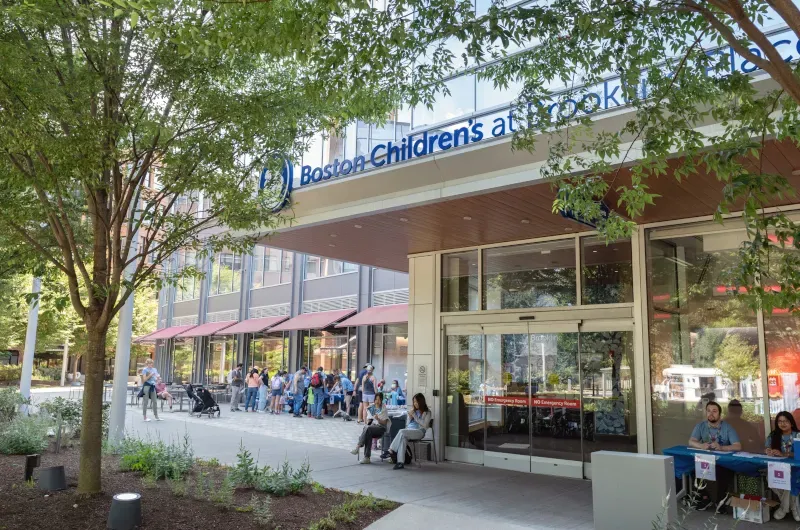
Comprehensive Care TeamResearch FocusedPart of Major Health System
You are in an academic pediatric MS program that brings together specialists for complex autoimmune and neuroinflammatory care. You will likely appreciate the broad treatment approach, the team-based support services, and the option for a second opinion.
Facility Profile
Synthesized from this facility's public website and data sources. Not a recommendation or ranking — just a summary to help you orient.
Direct Doctor Access2/5
Support Services5/5
Clinical Trials & Research4/5
Insurance & Navigation Help3/5
Scheduling & Virtual Care3/5
About Boston Children's Hospital Pediatric MS Program
AI summary of this centre's website
This program is specifically built for pediatric neuroimmunology, not just general neurology, and it treats a broad range of MS-related and autoimmune brain and spine conditions. Its Boston Children's Hospital affiliation places it within a major academic medical setting.
This Boston program focuses on pediatric multiple sclerosis and a wide range of related autoimmune and inflammatory conditions that affect the central nervous system. It cares for children and teens with MS, including relapsing-remitting, primary progressive, and secondary progressive forms, as well as disorders such as optic neuritis, MOG antibody disease, transverse myelitis, and autoimmune encephalitis. You can expect a multidisciplinary approach that may include medication treatment, therapy services, counseling, nutrition support, and neuropsychology.
Good to know
Second opinions are available.
A patient portal is available for ongoing care.
International families are welcomed through Global Services.
Care includes education support, neuropsychology, therapy services, social work, and nutrition support.
Boston Children's Hospital Pediatric MS Program is a pediatric neuroimmunology center in Boston that cares for children and teens with multiple sclerosis and related conditions. Founded in 2008, it is affiliated with Boston Children's Hospital. Your care can include neurologists, nurses, therapists, social workers, neuropsychology, and education support, all working together with your family. The team also offers second opinions and a patient portal for ongoing care.
Featured Care Team Members
Mark P. Gorman, MD
Director, Pediatric Multiple Sclerosis & Related Disorders Program; Co-Director, Pediatric Neuroimmunology Center; Neurologist, Department of Neurology
pediatric neuroimmunology / multiple sclerosis
Leslie Benson, MD
Assistant Director, Pediatric Multiple Sclerosis and Related Disorders Program; Co-Director, Pediatric Neuroimmunology Center; Neurologist, Department of Neurology
pediatric neuroimmunology / multiple sclerosis
Milena Andzelm, MD, PhD
Neurologist, Department of Neurology
pediatric neurology
Rebecca MacRae, MD
Neurologist, Neuroimmunology Center; Department of Neurology
neuroimmunology
Coral Stredny, MD
Neurologist, Department of Neurology
pediatric neurology
Molly Wilson-Murphy, MD
Neurologist, Department of Neurology
pediatric neurology
Specialized Programs
Pediatric Multiple Sclerosis & Related Disorders Program
pediatric neuroimmunology caremultiple sclerosis careautoimmune disease care affecting the central nervous systemmultidisciplinary support servicessecond opinionsteroidsdisease-modifying medicationsimmunotherapiesrituximabintravenous immunoglobulin (IVIG)anakinratocilizumabphysical therapyoccupational therapyspeech therapypsychotherapycounselingnerve transfer surgerytendon transfer surgery
Diagnostics
MRIblood testslumbar puncturecerebrospinal fluid testingnerve conduction testingneurologic examinationmedical and family history review
Research & Clinical Trials
This center is currently involved in 4 clinical trials
A Study of Ocrelizumab in Children and Adolescents With Relapsing-Remitting Multiple Sclerosis
FAQs from Boston Children's Hospital Pediatric MS Program
The program treats multiple sclerosis in children and teens, including relapsing-remitting, primary progressive, and secondary progressive MS. It also cares for related conditions such as optic neuritis, MOG antibody disease, transverse myelitis, autoimmune encephalitis, ADEM, and several other autoimmune or inflammatory disorders affecting the brain and spine.
Treatment can include steroids, disease-modifying medications, immunotherapies, rituximab, IVIG, anakinra, and tocilizumab. The team also offers supportive therapies such as physical therapy, occupational therapy, speech therapy, psychotherapy, and counseling.
Yes, second opinions are available. This can be helpful if your child has a new diagnosis, a complex symptom pattern, or you want another expert review of a treatment plan.
Your child’s care may involve neurologists, nurse practitioners, neuropsychologists, staff nurses, nutrition specialists, speech-language pathologists, physical therapists, occupational therapists, and clinical social workers. The program also includes education support and a patient family educator.
You can request an appointment by calling 857-218-4794 or using the appointment request form from Boston Children's Hospital. A patient portal is also available for ongoing communication and care.
Track symptoms, monitor wellness, and stay on top of your MS care. It’s free, with no ads. Built by people living with MS.
Information on this page is compiled from public sources including facility websites, ClinicalTrials.gov, CMS data, and AI analysis. It may not be complete or current. Always verify directly with the facility.