Healthier eating linked to lower odds of having MS
By MS Buddy ·
Summarized from Neurodegenerative disease management, Nov 2026 · PubMed · DOI. AI-generated summary. Not medical advice.
Meta-analysis · people with and without MS in studies of eating habits
Research by Hamid Abbasi, Saeid Doaei and 1 colleague at Shahid Beheshti University of Medical Sciences and the Guilan University of Medical Sciences in Iran.
Are healthier eating habits linked to lower odds of having MS?
Key Takeaway
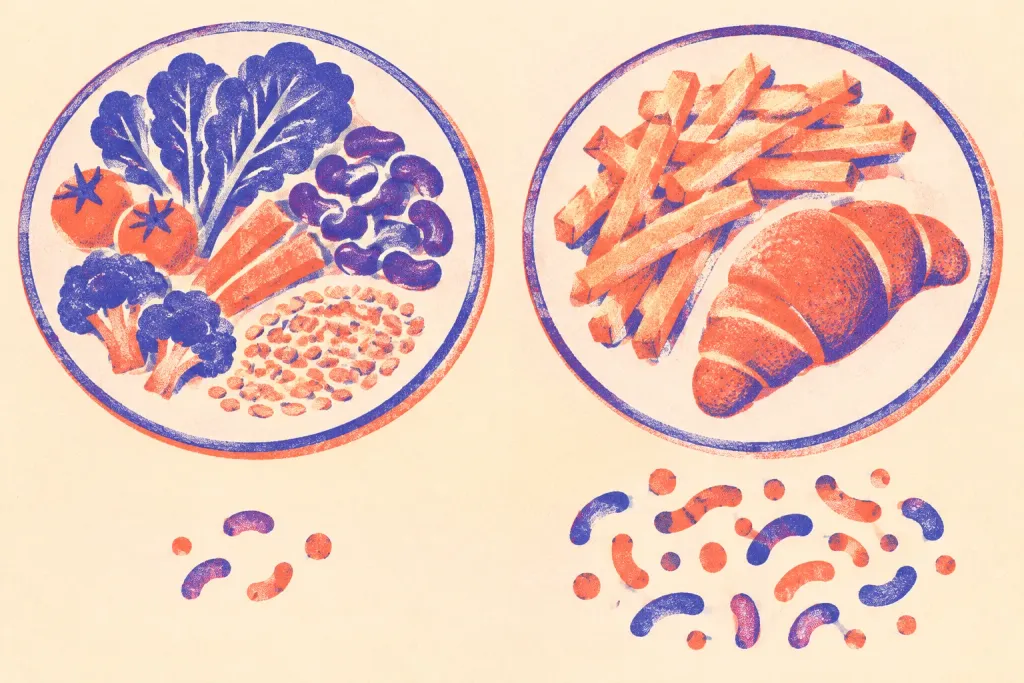
Healthier eating patterns were linked to lower odds of having MS, while less healthy patterns were linked to higher odds.
What They Found
The researchers combined results from studies on eating habits and MS. People who followed healthier eating patterns had about one-third the odds of having MS compared with those who followed them less closely. People who followed less healthy eating patterns had more than twice the odds of having MS. Mixed eating patterns had no clear link to the odds of having MS. Results for mixed eating patterns varied more across studies than results for the other patterns.
Who Should Care and Why
The review drew on studies of people with and without MS. It looked at overall eating habits rather than single foods. The main findings were about who had MS. The abstract does not report whether eating patterns were linked to symptoms or disability. It does not give separate results for different forms of MS.
Important Considerations
The researchers combined results from 10 studies that observed people's eating habits without assigning diets. The abstract does not report how many people took part. These studies cannot show whether changing eating habits would prevent MS.
AI-generated summary — for informational purposes only, not medical advice
Read the original abstract
Published in Neurodegenerative disease management by . Reproduced from the PubMed record.
Multiple sclerosis (MS) is a neurodegenerative autoimmune disorder causing disability in young adults. Dietary habits have been linked to MS odds, which suggests that a healthy lifestyle could influence disease prevention. This meta-analysis investigates the link between MS odds and a posteriori dietary patterns (DPs), as well as related clinical outcomes. PubMed, Scopus, and Web of Science databases were systematically searched to identify eligible studies published before December 2025. In this meta-analysis, statistical analyses were executed using RStudio v2026.01.0 in conjunction with R v4.7.0. Ultimately, 10 eligible observational studies were included, of which six studies were case-control, two were cross-sectional, and two were cohort studies. The meta-analysis indicated that adherence to Healthy DPs (HDP) was associated with significantly lower odds of MS (OR: 0.33, 95% CI: 0.23, 0.48; I2 = 0%, p = 0.611). Conversely, unhealthy DPs (UHDP) were associated with more than two-fold higher odds of MS (OR: 2.22, 95% CI: 1.91, 2.59; I2 = 0%, p = 0.481). In addition, mixed DPs were not significantly associated with the odds of MS (OR: 0.88, 95% CI: 0.56, 1.38; I2 = 82.4%, p < 0.0001). Our meta-analysis suggests a potential inverse association between HDP and MS odds, and a positive association between UHDP and MS odds.Protocol registration: https://www.crd.york.ac.uk/PROSPERO/view/CRD42024509296 identifier is CRD42024509296.
Categories
Explore more research
Check out the MS Buddy app
It’s free, with no ads. Built by people living with MS.


Related MS research

1/1/2026
In people with MS in Saudi Arabia, vitamin D levels had no simple link to pain or confidence in mana
Read More
11/13/2026
A Kuwait study compared people with and without MS. Higher salt intake and lifelong obesity were lin
Read More
11/6/2026
A study of children with MS linked higher propionate, a substance made in the gut, with less disease
Read More
10/30/2026
A study in diabetic mice found that an MS medicine helped blood vessels relax and reduced inflammati
Read More
10/25/2026
Learn why repairing the damaged nerve coating in MS is hard, what researchers are studying, and whic
Read More
10/22/2026
A Swedish study links rituximab for MS to a higher risk of bowel disease than other treatments. Lear
Read MoreNot all studies carry the same weight: sample size, study design and whether results were replicated all matter. The credibility score above reflects the journal, and the original paper is linked under More Details. Read how MS Buddy selects and scores research, and talk to your MS care team before acting on any study.