Choosing a first MS treatment brought fear and doubt
By MS Buddy ·
Summarized from Qualitative health research, Nov 2026 · PubMed · DOI. AI-generated summary. Not medical advice.
17 people newly diagnosed with MS involving relapses and periods of recovery
Research by Eva van Reenen, Leo Visser and 3 colleagues at the University of Humanistic Studies and Drew University in the Netherlands and the United States.
How do people with newly diagnosed MS experience choosing their first treatment?
Key Takeaway
Choosing a first MS treatment involved fear, doubt, and uncertainty about both future disability and whether treatment would work.
What They Found
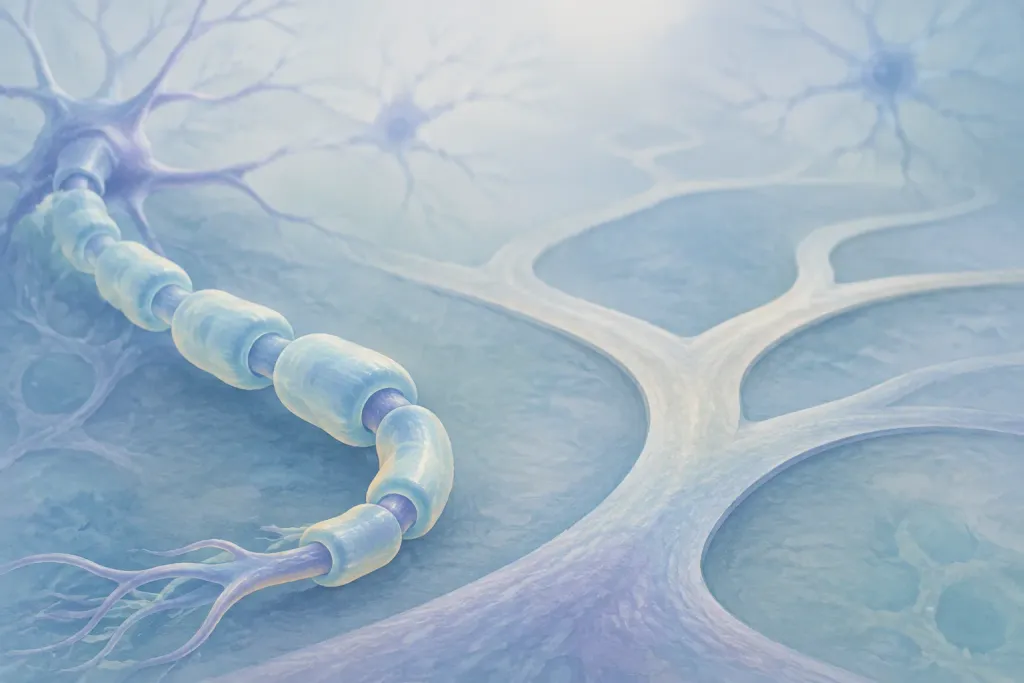
Participants described choosing treatment as a difficult journey marked by fear, doubt, and responsibility. They faced uncertainty about both how MS would develop and how well treatment would work. Some sought the safest option, while others felt confused, disappointed, or in need of clearer explanations. Participants managed uncertainty by building personal stories, trusting doctors, or accepting what they could not control. Their experiences suggested that treatment decisions involved emotions and relationships, not just weighing facts and preferences.
Who Should Care and Why
The study involved people recently diagnosed with relapsing-remitting MS (MS with flare-ups followed by periods of recovery). They were choosing their first medicine intended to change the course of MS. Their care emphasized shared decision making (patients and healthcare professionals making treatment choices together). The findings describe how difficult these choices felt even when patients were involved in decisions. They highlight the role of trust, personal meaning, and ongoing support when treatment outcomes remain uncertain.
Important Considerations
This study analyzed interviews with 17 people recently diagnosed with MS. It explored their experiences rather than comparing treatments or measuring how well medicines worked. It does not show whether a different approach to treatment decisions would improve health outcomes.
AI-generated summary — for informational purposes only, not medical advice
Read the original abstract
Published in Qualitative health research by et al.. Reproduced from the PubMed record.
People with relapsing-remitting multiple sclerosis (RRMS) face complex choices among various disease-modifying therapies (DMTs), each marked by uncertain outcomes. Shared decision making (SDM) is increasingly promoted to support such treatment decisions, yet how people experience choosing a DMT under inherent uncertainty within this context remains underexplored. This study examines how people with RRMS experience the initial choice for a DMT under inherent uncertainty within an SDM-framed healthcare context. A phenomenological-hermeneutic approach was adopted, involving interviews with 17 participants recently diagnosed with RRMS. Analysis reveals six experiential pathways: making the safer bet, facing confusion and disappointment, longing for clarity and understanding, constructing a narrative, relinquishing control, and putting in the work. Participants experience the decision as an arduous journey marked by fear, doubt, and responsibility. They grapple with 'double uncertainty' regarding both disease progression and treatment effectiveness. While SDM typically frames decision making as a rational weighing of evidence and preferences, participants experience treatment decisions as precarious, emotionally charged, and relationally embedded. Rather than eliminating uncertainty, they seek to reconcile with it by constructing narratives, trusting physicians, or surrendering to what cannot be controlled. These findings challenge a narrow view of SDM as a rational, individual act based on clear-cut evidence and stable preferences. They point to the need for a broader understanding of SDM as a relational, iterative practice, in which uncertainty is a moral and existential condition of care. This requires acknowledging uncertainty as part of care and supporting patients in integrating medical choices into meaningful, evolving life narratives.
Categories
Explore more research
Check out the MS Buddy app
It’s free, with no ads. Built by people living with MS.


Related MS research

11/19/2026
A review of 50 studies found wide differences in MS rates across the Americas. MS became more common
Read More
11/20/2026
A study of online MS medication discussions found two main styles: sharing personal experiences and
Read More
11/18/2026
A review finds limited direct evidence that diet, exercise, or gut microbes affect MS through the bo
Read More
11/18/2026
This review explores how pregnancy may affect MS and other diseases involving immune attacks on the
Read More
11/15/2026
A survey of 24 Israeli MS specialists found agreement on weighing more than age when treating older
Read More
11/12/2026
A blood study found higher mercury and chromium, but lower aluminum and titanium, in people with MS
Read MoreNot all studies carry the same weight: sample size, study design and whether results were replicated all matter. The credibility score above reflects the journal, and the original paper is linked under More Details. Read how MS Buddy selects and scores research, and talk to your MS care team before acting on any study.