MS Research Roundup: May 2026
The multiple sclerosis research published in May 2026, explained in plain language. Studies are listed by how much they matter to people living with MS, most first.
The month at a glance
- 12 studies published this month.
- Newest study published May 25, 2026.
- 2 in people, 6 in the lab or in animals, 2 reviews of earlier research.
- Largest study: 52,639 people.
- Research from 38 institutions in 13 countries, including Fudan University, Hanyang University and Lund University.
- Forms of MS studied: relapsing-remitting (1).
- One study in people tested a treatment and found no difference.
Studies published in May 2026
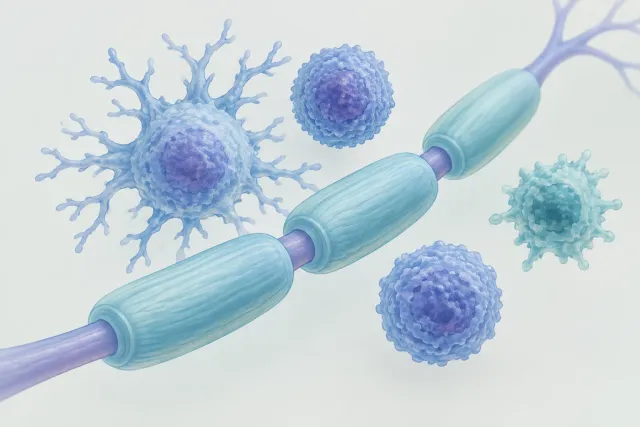
MS: Treatment did not boost protective cells after Lemtrada
In people with relapsing MS previously treated with Lemtrada, a low-dose immune signal did not increase cells that help prevent the body from attacking itself.

New brain scan analysis improved MS classification
Researchers studied brain scans in 1,189 people. Using more scan measures improved MS classification. They also designed a faster way to scan the whole brain.

Blood proteins may signal MS years before diagnosis
A study linked blood proteins to MS risk and found some in samples collected before diagnosis. It did not establish a blood test that predicts who will get MS.

MS review proposes broader ways to predict disability
Researchers propose looking at damage, its location, and the brain's ability to adapt when predicting how MS may change. The approach is not a clinical guideline.

Review calls for clearer studies of MS and other illnesses
A review explains why MS and other chronic illnesses can be hard to study, and proposes clearer participant selection, sample collection, and comparison groups.

In mice, reducing harmful molecules eased MS-like disease
In mice with an MS-like disease, reducing harmful molecules in invading immune cells eased disease severity. The study did not test a treatment in people.
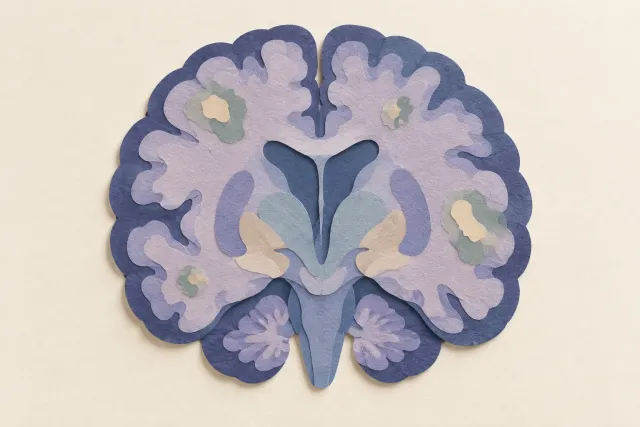
New brain scan method maps MS lesions and brain tissue
Researchers developed a brain scan method that measures several tissue features at once. It helped describe MS lesions, but its effect on care remains untested.

In mice, abatacept pairing eased an MS-like disease
In mice, abatacept paired with an immune signal eased an MS-like disease. The pairing also increased protective immune cells taken from people with MS.

In mice, blocking myelin upkeep caused damage seen in MS
Researchers removed a protein from cells that maintain myelin in adult mice. Myelin broke down, and immune cells increased in the brain. People with MS were not studied.

In mice, low arginine worsened brain inflammation, not MS
In a mouse study of brain inflammation, low dietary arginine worsened disease. Blocking its breakdown in certain immune cells improved outcomes, but MS was not studied.
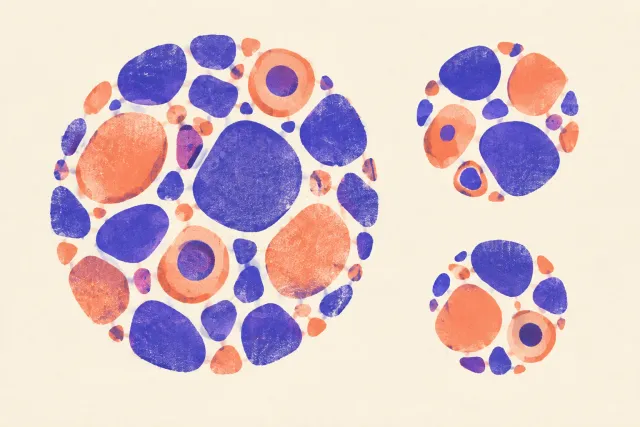
Mouse models miss some cell changes seen in MS brains
Researchers compared two mouse models of myelin damage with MS cell data. The models shared some cell changes with MS but missed others seen in people with MS.

In mice, loss of an immune signal worsened MS-like disease
In mice with an MS-like disease, loss of an immune signal left cells less able to clear damaged myelin. Disease, inflammation, and myelin damage worsened.
Check out the MS Buddy app
Track symptoms, monitor wellness, and stay on top of your MS care. It’s free, with no ads. Built by people living with MS.

