MS Research Roundup: October 2024
The multiple sclerosis research published in October 2024, explained in plain language. Studies are listed by how much they matter to people living with MS, most first.
The month at a glance
- 24 studies published this month.
- Newest study published October 30, 2024.
- 5 in people, 10 in the lab or in animals, 8 reviews of earlier research.
- Largest study: 12,584 people.
- Research from 91 institutions in 23 countries, including Johns Hopkins University School of Medicine, the University of California San Francisco and the University of Cambridge.
- Forms of MS studied: primary progressive (3), relapsing-remitting (3), secondary progressive (3).
- One study in people tested a treatment and had mixed results.
Studies published in October 2024

Study links obesity to worse long-term MS disability
A genetic study of 12,584 people with MS linked higher body weight to worse disability. It did not test whether losing weight changes MS outcomes.

Blood tests may flag MS worsening without relapses
In people with MS starting drugs that remove B cells, two blood markers showed different patterns. Higher levels were linked to later worsening without relapses.

Rituximab cut MS relapses; infections rose after switch
In a Swedish study of relapsing MS, rituximab was linked to fewer relapses but more hospital-treated infections after a treatment switch, not at first treatment.
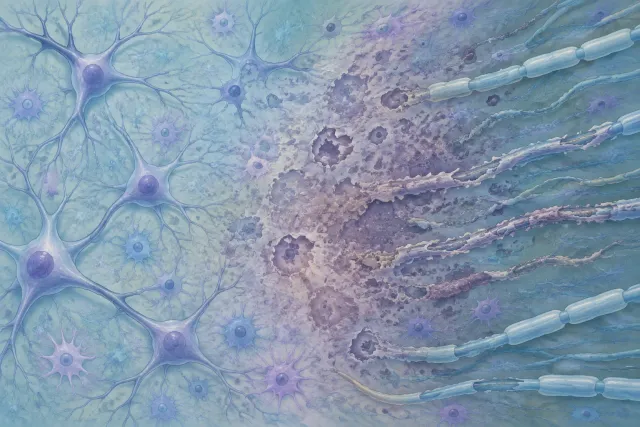
In progressive MS, slow-growing lesions tracked brain damage
A study of donated MS brains linked slow-growing lesions to nerve cell injury and loss. The findings do not show whether the lesions caused the damage.
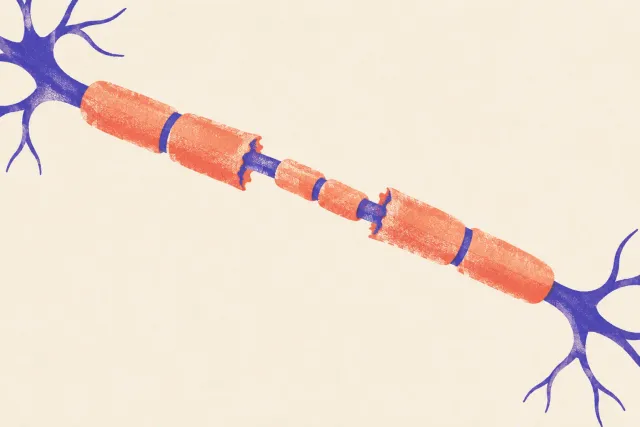
Review: Copaxone may help repair nerve covering in MS
A review of Copaxone research describes changes in immune activity and possible nerve covering repair in MS, but does not measure repair in a new trial.

New brain scans track repair and damage in MS lesions
Detailed brain scans tracked MS lesions over two years. Most stayed stable, while others showed signs of repair or damage linked with disability and MS type.

MS disability worsened more slowly in recent years
A study of 1,405 people with relapsing MS found slower disability worsening in more recent diagnosis groups, including worsening that happened without a relapse.
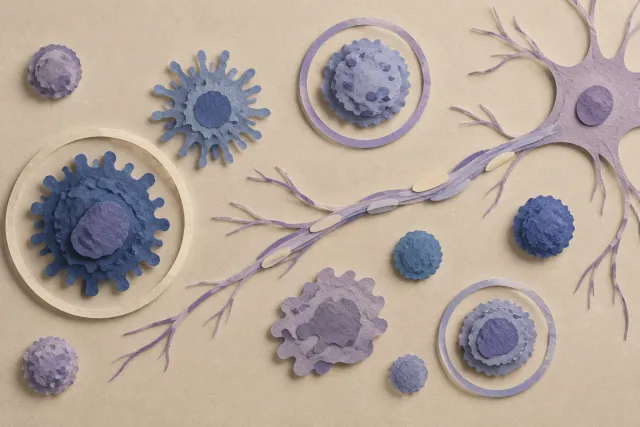
Review examines targeted immune treatments for MS and more
A review covers MS and other diseases in which the immune system attacks the body, including targeted treatments studied in animals and clinical trials.

MS diagnosis may miss look-alikes in minority groups
A review examines MS look-alike conditions and social barriers that may affect diagnosis for minority racial and ethnic groups in several high-MS regions.

MS diagnosis may need different checks across regions
A global review explains why checking for diseases common in each region matters when diagnosing MS outside North America and western Europe.

Tracking progressive MS needs more than disability scores
This review explains why disability scores alone miss parts of progressive MS and how scans, blood tests, patient reports, and wearables may add detail.

MS antibodies matched virus parts more than once thought
Researchers found that parts of human-infecting viruses resemble human proteins. They also found more of this resemblance in MS antibodies than previously known.

MS risk gene linked to stronger Epstein-Barr response
A lab study found stronger responses to two Epstein-Barr virus proteins in people with an MS risk gene. It did not test whether those responses cause MS.

In mice, myelin repair reduced MS-like nerve cell loss
In two mouse models of damaged nerve coverings, successful repair was linked to less nerve cell death. Blocking a damage signal also protected nerve cells.

Progressive MS gut bacteria raised disease risk in mice
A gut bacterium was more common in people with progressive MS. A distinct type made mice more likely to develop an MS-like disease, but human effects remain unclear.

In rabbits, clemastine depleted cells needed for MS repair
In rabbits with damaged nerve covering, clemastine boosted repair cell production but depleted the cells that supply them. The study did not include people with MS.
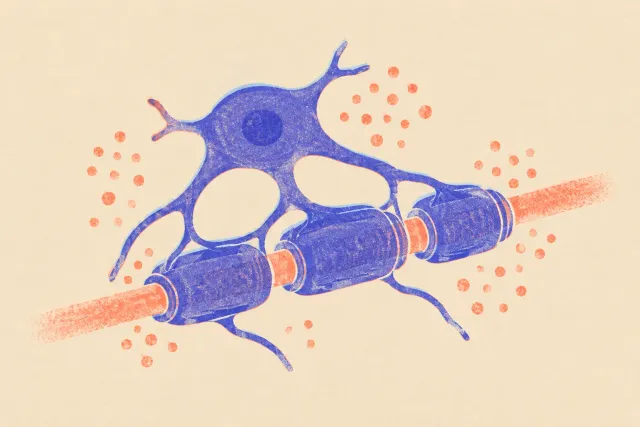
Review: Myelin-making cells may shape MS progression
A review proposes that cells that make myelin may help shape inflammation and MS progression. It does not report results from testing a treatment in people.

MS-related brain inflammation: Cells may damage or repair
This review proposes that some immune cells add to brain damage, while others help repair tissue during inflammation related to MS. It did not test a treatment.

In MS-like mice, blocking vessel growth did not help
In mice with an MS-like disease, blocking a vessel-growth signal reduced new vessel growth but did not repair the brain's protective barrier or improve disease.

New cell map tracks DNA activity in MS and other diseases
Researchers made a cell map of mobile DNA activity in MS, Alzheimer's, and Parkinson's disease. The study did not test a treatment or explain MS symptoms.
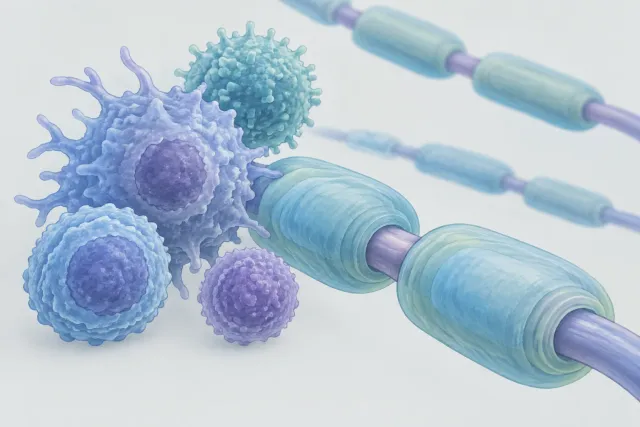
In mice, activating immune cells eased MS-like disease
In mice with an MS-like disease, activating certain immune cells eased disease, while blocking their activation made it worse. The study did not test people.

Edited cells improved MS-like nerve repair in rodents
In rodents with long-lasting nerve damage, edited human cells moved farther and repaired more nerve covering than comparison cells. The study did not test people.

MS lab study: Gray matter cells wrapped fibers more
In an MS-related lab study, gray matter cells wrapped artificial fibers more often than white matter cells. Young gray matter cells were also more prone to injury.

Lab-grown human cells may help study inflammation in MS
A review describes lab-grown human cell models for studying brain inflammation in MS and other diseases. These research tools have limits and test no treatment.
Check out the MS Buddy app
Track symptoms, monitor wellness, and stay on top of your MS care. It’s free, with no ads. Built by people living with MS.

