MS Research Roundup: November 2024
The multiple sclerosis research published in November 2024, explained in plain language. Studies are listed by how much they matter to people living with MS, most first.
The month at a glance
- 10 studies published this month.
- Newest study published November 28, 2024.
- 2 in people, 4 in the lab or in animals, 4 reviews of earlier research.
- Largest study: 2,290 people.
- Research from 37 institutions in 13 countries, including the University of Basel, Harvard T.H. Chan School of Public Health and Amsterdam University Medical College VUMC.
- Forms of MS studied: primary progressive (1), relapsing-remitting (1).
- One study in people tested a treatment and had mixed results.
Studies published in November 2024

Evobrutinib did not beat Aubagio for MS flare-ups in trials
In two trials of relapsing MS, evobrutinib did not prevent more flare-ups than Aubagio. Serious health problems and signs of liver damage were more common.

MS diagnosis rules also worked for primary progressive MS
In a review of 322 people evaluated for primary progressive MS, rules used for relapsing MS identified most cases and ruled out most other conditions.

Review links Epstein-Barr virus to MS and other diseases
A review examines the link between Epstein-Barr virus and MS, explores how the virus might affect the immune system, and discusses possible treatments.

Poor ability to cope with illness may affect MS care
This review discusses how frailty may affect MS and other conditions. It suggests that assessing frailty could help doctors plan care, but gives no MS-specific results.
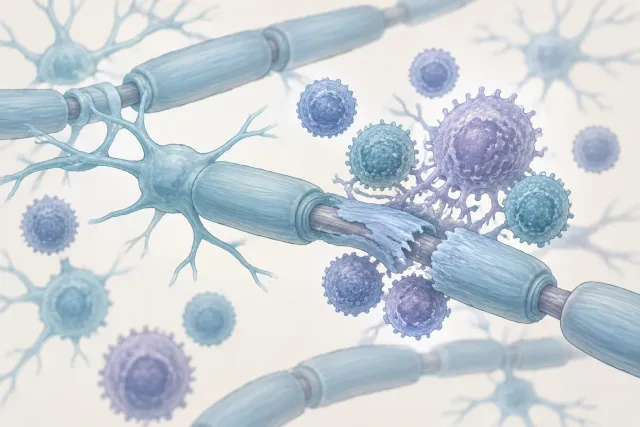
MS and related diseases: Immune drugs show mixed results
This review covers MS and related diseases. Treatments aimed at immune signals worked in studies before human testing, but results in people were mixed.

In animals, blocking immune signals sped repair tied to MS
In animal experiments, blocking immune signals sped repair of damaged nerve covering and improved movement. The study did not test a treatment in people with MS.

In MS lab cells, simvastatin reduced nerve cell harm
Cells made from people with progressive MS harmed nerve cells in a lab study. Simvastatin changed the signals those cells released and reduced that harm.
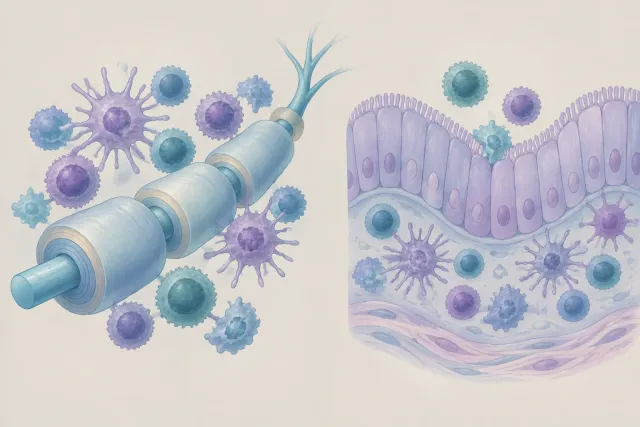
MS and celiac disease may share immune system patterns
Authors compare MS and celiac disease to explore how inherited traits and immune cells may shape MS. They discuss a treatment idea but report no treatment test.

In older mice, a supplement improved MS-like myelin repair
In older mice, a supplement improved repair of damaged myelin and thinking skills. Researchers also found a related protein was lower in donated MS tissue.
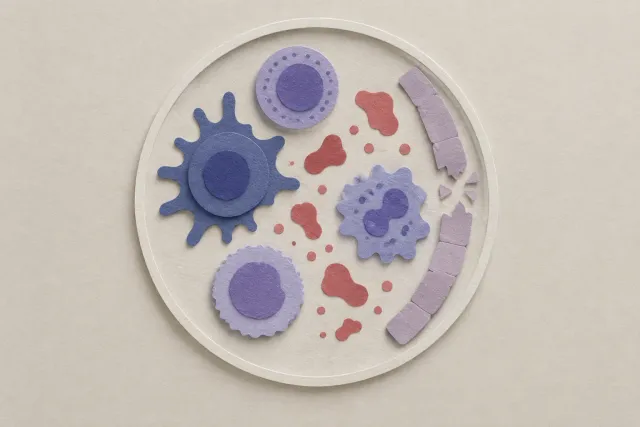
Immune Cells Gained Inflammation Potential; MS Not Studied
In a lab study, removing a natural brake made immune cells more likely to drive inflammation. The research did not study people with MS or test a treatment.
Check out the MS Buddy app
Track symptoms, monitor wellness, and stay on top of your MS care. It’s free, with no ads. Built by people living with MS.

