Changes in how cells use fuel may make MS worse over time
By MS Buddy ·
Summarized from Current opinion in immunology, Nov 2026 · PubMed. AI-generated summary. Not medical advice.
Review · Research on MS and other diseases where immunity attacks the body
Research by Nancy Duarte-Delgado and Luz-Stella Rodríguez C at Oulu University and Pontificia Universidad Javeriana in Finland and Colombia.
How do changes in the way cells use fuel affect MS?
Key Takeaway
The review found that changes in how cells use fuel mainly make MS and other immune diseases worse rather than starting them.
What They Found
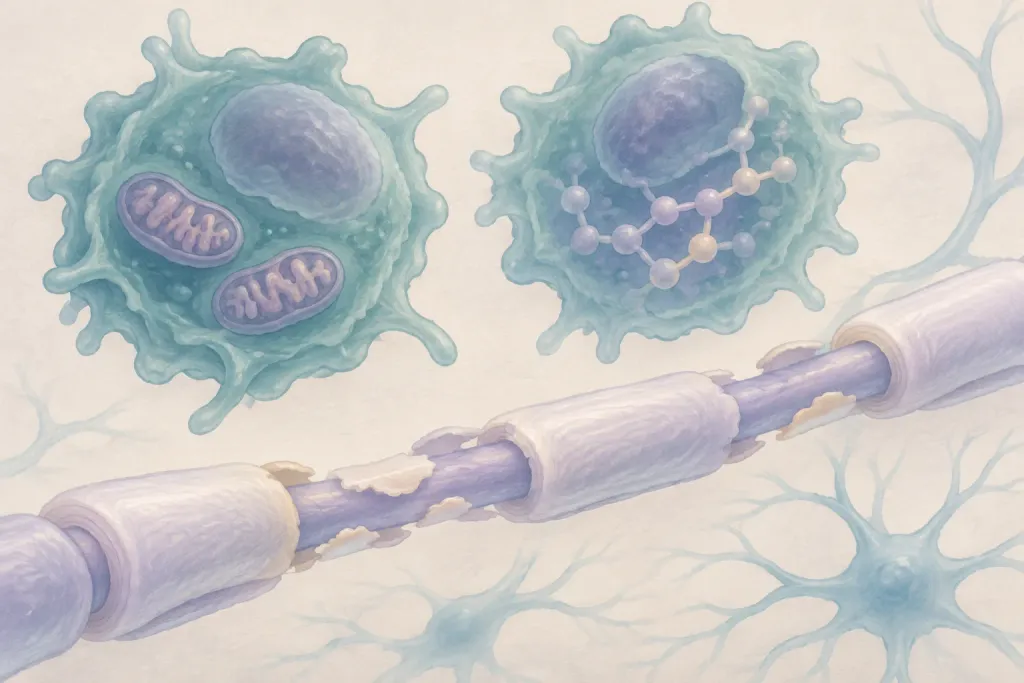
Changes in how cells use sugars and fats can affect how immune cells respond. These changes can boost harmful immune responses and weaken the cells that help keep them in check. Problems with how cells make energy may help explain why genes and the environment affect whether the immune system attacks the body. The same changes can have different effects in different parts of the body. The review found possible signs of these changes, but none have been confirmed as reliable.
Who Should Care and Why
This review covers MS and other diseases in which the immune system attacks the body. It also covers rheumatoid arthritis, lupus, and type 1 diabetes. The authors compare how changes in fuel use affect the immune system in each disease. For MS, they focus on how these changes affect immune activity in the brain and spinal cord.
Important Considerations
This was a review of existing research, and the abstract gives no participant count. The authors distinguish changes shown to drive disease from changes that might play a role but are not yet proven to do so. The possible signs described in the review have not been confirmed as reliable.
AI-generated summary — for informational purposes only, not medical advice
Read the original abstract
Published in Current opinion in immunology by . Reproduced from the PubMed record.
Autoimmune diseases are associated with cellular metabolic reprogramming. Disruptions to key metabolic pathways - including glycolysis, oxidative phosphorylation, amino acid degradation, and fatty acid oxidation - affect immune cell activation, promote pathogenic Th1/Th17 responses, destabilize regulatory T cells, support autoreactive B cells, and influence macrophage polarization. Mitochondrial dysfunction, oxidative stress, mTOR activation, lipid and sphingolipid remodeling, and gut microbiota metabolites link environmental and genetic factors to failures in self-tolerance. Each disease has distinct metabolic traits. For rheumatoid arthritis, systemic lupus erythematosus, multiple sclerosis, and type 1 diabetes, we trace the sequence of pathways, immunological effects, and phenotypes; explain why shared pathways differ in the synovium, kidney, central nervous system, and pancreatic islets; and describe the evidence that distinguishes causal mechanisms from plausible ones, along with potential biomarker signatures, none of which has yet been validated. Metabolic reprogramming primarily amplifies diseases rather than initiating them.
Categories
Explore more research
Check out the MS Buddy app
It’s free, with no ads. Built by people living with MS.


Related MS research
11/23/2026
A review looks at immune cells altered to calm specific immune attacks. It covers early research on
Read More
11/23/2026
A lower-strength MRI spotted loss of the protective covering around nerve fibers in mice. Stronger s
Read More
12/1/2026
In a mouse study related to MS, more immune cells gathered in the brain and spinal cord after a last
Read More
11/20/2026
A review looks at changes in how the body uses tryptophan (a building block of proteins) in MS and o
Read More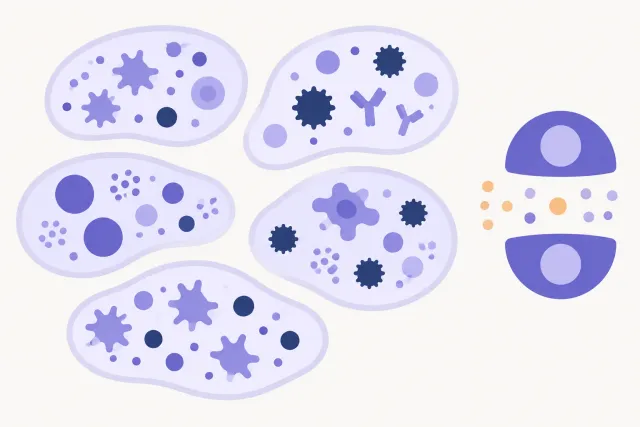
11/19/2026
Five people with MS received engineered immune cells. Spinal fluid immune changes were seen, but saf
Read More
11/20/2026
A small study followed brain connections and thinking in early MS over 10 months. Patterns differed
Read MoreNot all studies carry the same weight: sample size, study design and whether results were replicated all matter. The credibility score above reflects the journal, and the original paper is linked under More Details. Read how MS Buddy selects and scores research, and talk to your MS care team before acting on any study.