Plant compounds eased MS-linked inflammation in early tests
By MS Buddy ·
Summarized from Zeitschrift fur Naturforschung. C, Journal of biosciences, Nov 2026 · PubMed · DOI. AI-generated summary. Not medical advice.
Review · Brain immune cells studied in early experiments
Research by Krishnendu Adhikary, Hitesh Chopra and 12 colleagues at the Centurion University of Technology and Management, Lovely Professional University and 7 other institutions in India and the United States.
Can compounds from medicinal plants reduce inflammation linked to MS?
Key Takeaway
In early studies, compounds from medicinal plants changed how the brain’s immune cells behaved and reduced inflammation linked to MS and other diseases.
What They Found
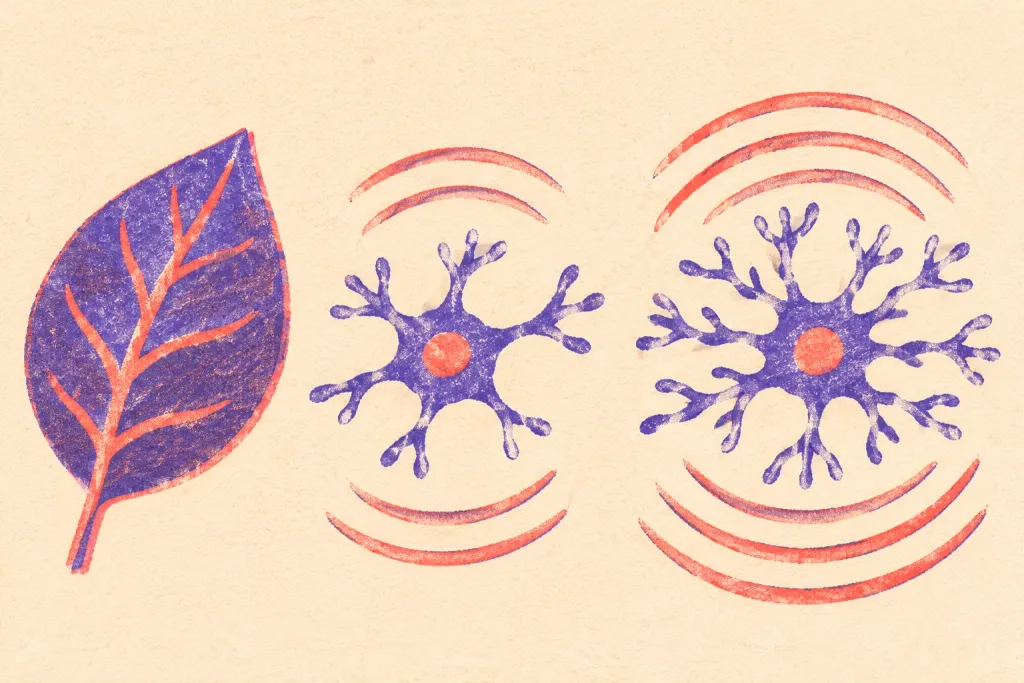
The review looked at early studies of medicinal plant extracts and the compounds they contain. Some compounds changed how the brain’s immune cells responded. They reduced the signals these cells release to promote inflammation. They also reduced a type of chemical stress that can damage cells. The studies suggested that these changes may help protect and repair nerve tissue.
Who Should Care and Why
The review covered early experiments on the brain’s immune cells, not studies of people receiving treatment. It discussed MS alongside Parkinson’s disease and Alzheimer’s disease. The review focused on inflammation linked to these diseases. It did not report findings for any specific form of MS.
Important Considerations
This review of early experiments does not show that medicinal plant extracts are safe or helpful for people with MS. The body may absorb too little of some compounds. Extracts can vary in what they contain, and there is no standard way to prepare them.
AI-generated summary — for informational purposes only, not medical advice
Read the original abstract
Published in Zeitschrift fur Naturforschung. C, Journal of biosciences by et al.. Reproduced from the PubMed record.
Microglial dysfunction plays a critical role in the pathophysiology of several neurodegenerative diseases, including multiple sclerosis, Parkinson's disease, and Alzheimer's disease. Emerging evidence suggests that targeting microglial activation could be a promising therapeutic strategy. This review critically examines recent studies investigating the effects of medicinal plant extracts and their bioactive compounds on microglial function. Relevant data from experimental and preclinical studies were analyzed to assess their neuroprotective and anti-inflammatory potential. Phytochemicals that are found in plants, especially flavonoids, alkaloids, and terpenoids, demonstrate important modulatory effects on microglials. These compounds control microglial polarization, inhibit the release of proinflammatory cytokines, and alleviate oxidative stress, thus, alleviating neuroinflammation and enhancing neuro-restoration. The results suggest that medicine plant extracts have effects on major molecular pathways associated with neuroinflammation, which provide new adjunctive treatment to neurodegenerative diseases. Nevertheless, there are still problems in the translation of these preclinical successes into clinical practice. The limited bioavailability, variability in phytochemical composition, and the absence of standardized formulations are some of the challenges that discourage clinical use. Also, thorough safety assessments should be conducted to achieve therapeutic effectiveness with no adverse effects. The medicinal plants and their bioactive compounds hold potential promise in regulating the dysfunction of microglia and in decreasing neuroinflammation. Future studies are needed to enhance the pharmacokinetic characteristics, to provide consistency in formulations, and to perform stringent clinical studies that would substantiate these findings and allow their use in therapeutic regimens of neuroinflammatory disorders.
Categories
Explore more research
Check out the MS Buddy app
It’s free, with no ads. Built by people living with MS.


Related MS research
11/23/2026
Researchers compared immune cells from people with MS who did and did not have a recent relapse. One
Read More
11/24/2026
A review looks at signs in body fluids that may help track nerve damage, immune activity, and worsen
Read More
11/23/2026
A review links changes in how cells use fuel to MS and other immune diseases. These changes appear m
Read More
11/23/2026
A review looks at immune cells altered to calm specific immune attacks. It covers early research on
Read More
11/23/2026
A lower-strength MRI spotted loss of the protective covering around nerve fibers in mice. Stronger s
Read More
12/1/2026
In a mouse study related to MS, more immune cells gathered in the brain and spinal cord after a last
Read MoreNot all studies carry the same weight: sample size, study design and whether results were replicated all matter. The credibility score above reflects the journal, and the original paper is linked under More Details. Read how MS Buddy selects and scores research, and talk to your MS care team before acting on any study.