MS Research Roundup: April 2025
The multiple sclerosis research published in April 2025, explained in plain language. Studies are listed by how much they matter to people living with MS, most first.
The month at a glance
- 25 studies published this month.
- Newest study published April 29, 2025.
- 8 in people, 10 in the lab or in animals, 3 reviews of earlier research.
- Largest study: 33,303 people.
- Research from 117 institutions in 30 countries, including the University of California San Francisco, the University of Pennsylvania and University College London.
- Forms of MS studied: relapsing-remitting (3), secondary progressive (2), primary progressive (1).
- Of the 3 studies in people that tested a treatment, 3 had mixed results.
Studies published in April 2025

Stem cell transplant had fewer relapses than MS drugs
In a London study of people with relapsing MS, stem cell transplant was linked to fewer flare-ups than Lemtrada or Ocrevus, but similar disability worsening.

Tolebrutinib slowed disability in secondary progressive MS
In a trial of 1,131 people with secondary progressive MS without relapses, fewer taking tolebrutinib had lasting disability worsening than those taking a placebo.
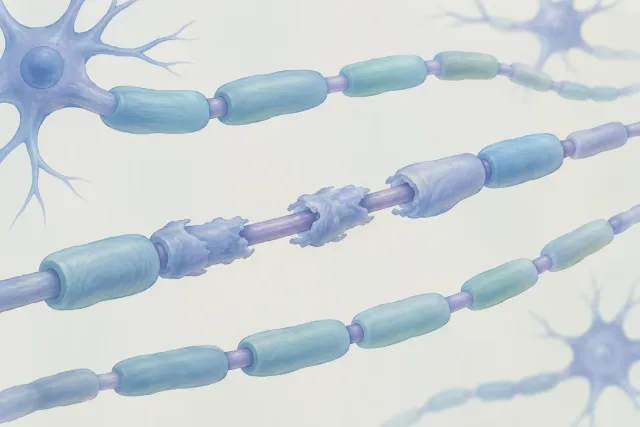
Tolebrutinib did not cut MS relapses more than Aubagio
In two trials of relapsing MS, tolebrutinib did not reduce flare-ups more than Aubagio. Disability worsening was less common, but minor bleeding was more common.
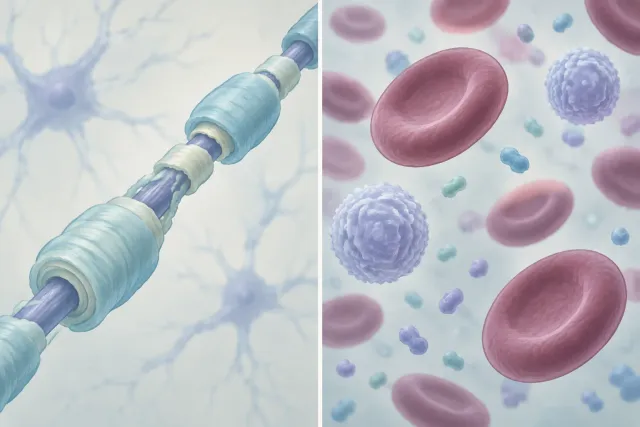
In MS and mice, a blood marker tracked myelin damage
A blood marker rose with myelin damage in mice and fell after repair. In two groups of people with MS, it was linked to signs of myelin breakdown.

AI tool found new MS lesions in written MRI reports
An AI tool identified new MS lesions in written MRI reports with about 97% accuracy. Researchers also examined scan activity after B-cell drug treatment.

MS worsening without relapses varies by study rules
A study of 33,303 people with MS found that rates of worsening without relapses changed with the rules used to measure it. Researchers proposed shared rules.

Epstein-Barr virus variant linked to MS risk in study
A study linked a version of an Epstein-Barr virus gene to MS risk. It also found changes in virus-related genes in blood and brain samples from people with MS.

New tool measures MS brain changes in old hospital scans
Researchers tested a new tool on thousands of MS brain scans. It measured lesions and brain shrinkage from older scans that used just one type of image.

New method sharpened portable MRI scans for people with MS
In a study of 63 adults with MS, a computer method made portable MRI images clearer and closer to standard scans, including when identifying MS lesions.

COVID-19 Vaccine Questions Remain for People With MS
A review of COVID-19 and MS discusses concerns about serious illness and vaccine response. It says the best vaccination approach remains unclear for people with MS.

MS starting after 50 showed less nerve-covering repair
Brain tissue from people whose MS began after 50 showed less evidence of nerve-covering repair than tissue from people whose MS began between ages 20 and 40.

In mice, loss of an immune switch reduced MS-like relapses
An immune switch helped drive MS-like disease in mice. Removing it reduced disease, especially at relapse, while human MS data showed a related gene was more active.
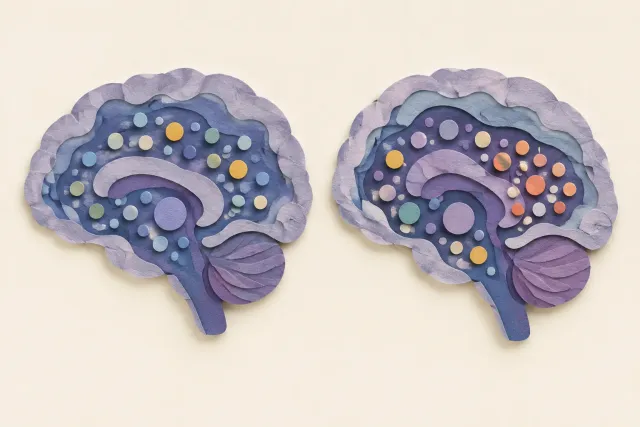
New lab map finds altered immune signals in MS brains
Researchers mapped inflammation-related substances in MS brain tissue and found differences in lesions. A separate test added one substance to lab-grown cells.

In mice, cell clusters kept MS-like inflammation going
In mice with an MS-like disease, immune cells in clusters around the brain worked together to keep inflammation going. This study did not include people with MS.

Review examines vaccines against a virus linked to MS
A review covers treatments and vaccines targeting Epstein-Barr virus, which might help trigger MS. It does not show whether these approaches work for MS.

In mice, lost sleep worsened progressive MS-like disease
In mice, disrupted sleep worsened progressive MS-like disease. Results from an earlier trial linked a Mediterranean diet to improved MS symptoms.

MS mouse study: Blocking a signal aided myelin repair
In mice, blocking a signal from blood immune cells increased myelin repair. Researchers also found the signal in blood and damaged brain tissue from people with MS.

In MS-like mice, removing an immune signal eased damage
In mice with an MS-like disease, removing an immune signal reduced spinal cord barrier damage. Lab tests explored how the signal weakened that barrier.
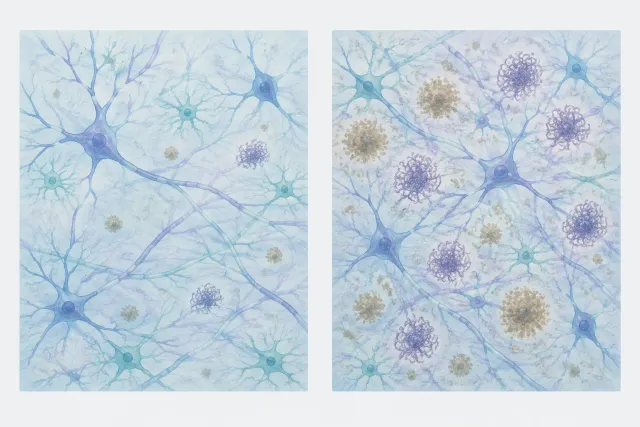
MS brains had fewer signs of Alzheimer's disease
A study of donated brain tissue found fewer Alzheimer's-related plaques and tangles in people with MS than in people without MS. It did not test a treatment.

MS review explores tiny cell packages as blood clues
A review explores how tiny packages released by brain cells might help researchers study MS and other nerve conditions through blood tests and drug delivery.
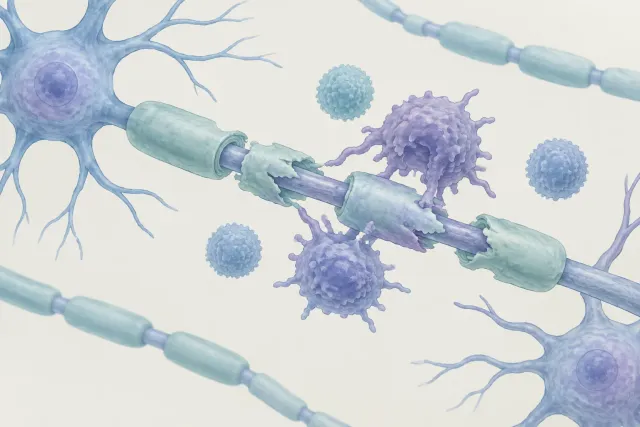
In mice with MS-like disease, maraviroc reduced damage
In mice with an MS-like disease, maraviroc reduced immune cell buildup, nerve covering damage, and disease worsening. The study did not include people with MS.
In mice, brain-reaching drugs eased MS-like illness
In mice with MS-like diseases, drugs that reached the brain eased illness and reduced signs of nerve damage. A drug that stayed outside the brain had little effect.

Removing an immune protein eased MS-like eye damage in mice
In mice with an MS-like disease, removing an immune protein eased early eye nerve injury and cell stress. Another sign of damage did not improve in this study.

MS theory links immune attacks on support cells to damage
A research article proposes that MS may start with an immune attack on brain cells that balance water and salts, with damage to myelin following afterward.

MS study finds blocked immune signal hinders repair in mice
Blocking an immune signal hindered myelin repair in mice. Related immune cells appeared in some donated MS brain lesions, but not in inactive lesions.
Check out the MS Buddy app
Track symptoms, monitor wellness, and stay on top of your MS care. It’s free, with no ads. Built by people living with MS.

