MS Research Roundup: August 2026
The multiple sclerosis research published in August 2026, explained in plain language. Studies are listed by how much they matter to people living with MS, most first.
The month at a glance
- 16 studies published this month.
- Newest study published August 29, 2026.
- 5 in people, 5 in the lab or in animals, 6 reviews of earlier research.
- Largest study: 1,701,154 people.
- Research from 50 institutions in 13 countries, including Amsterdam UMC Location Vrije Universiteit Amsterdam, Christian Albrechts University of Kiel and University Hospital Schleswig and Hasselt University.
- Symptoms studied: muscle weakness (1).
Studies published in August 2026

Heat linked to more emergency and urgent MS visits
In Chicago, extreme heat was linked to more emergency and urgent care visits with MS diagnoses. Researchers studied adult visits across four health care systems.

New MS diagnosis rules may raise misdiagnosis risks
A review of the 2024 MS diagnosis rules examines misdiagnosis risks, uneven access to tests, and why clearer guidance may help doctors apply the rules safely.

Blood marker may flag MS worsening without relapses
In two groups of people with MS, a higher blood marker level was linked to worsening without a relapse. Falling levels during treatment were linked to lower risk.

Emergency MS diagnosis linked to worse outcomes in England
An England health record study linked emergency diagnosis with worse outcomes across many conditions, including MS, but did not report separate MS results.

Review links lasting inflammation to MS nerve damage
A review explores how lasting inflammation in MS may fuel cycles of nerve cell damage. It compares MS with other brain disorders but tests no treatment.

Antibody test flagged an MS look-alike in four people
A blood test found an antibody in four of 297 people screened for immune-related brain and spinal cord diseases. Rat and mouse experiments showed cell damage.
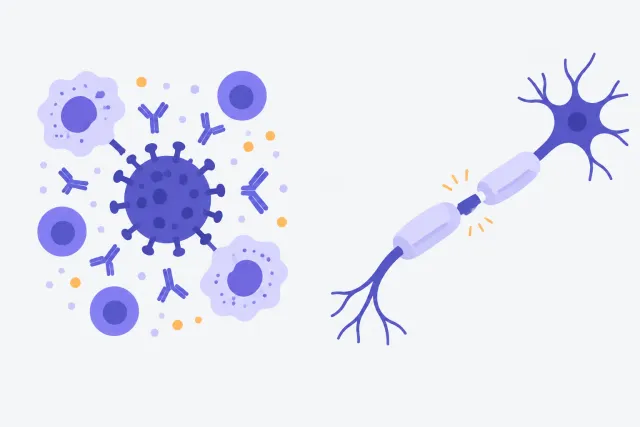
Epstein-Barr signs came before nerve injury signs in MS
A study of stored blood samples found stronger Epstein-Barr virus responses in people who later developed MS, years before blood signs of nerve injury appeared.
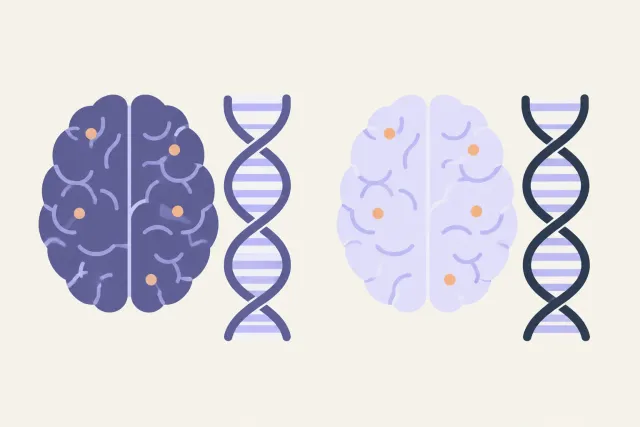
MS severity differed by genes, not just brain lesions
In 291 donated MS brains, genetic groups differed in disease severity. The group with worse outcomes did not have more active lesions in the tissue studied.

Review examines immune proteins in MS and other diseases
A review explores how immune proteins may damage nerves in MS and other conditions. It discusses possible treatments, but does not show that they work in people.

Review finds gaps in brain fat mapping for MS research
A review of 34 studies found that brain tissue scans can show where fats occur. MS was among the conditions studied, but a complete brain fat map is still missing.
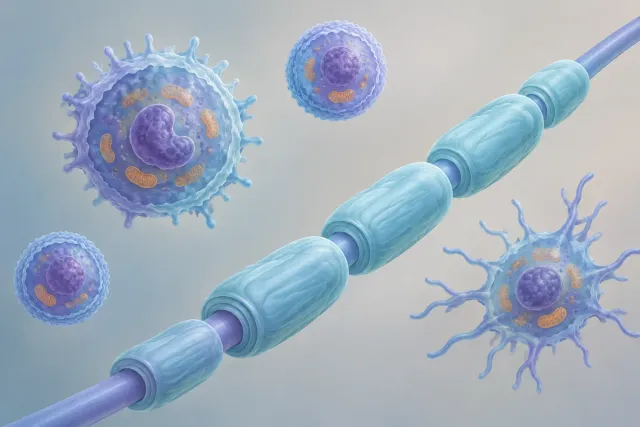
Review links immune cells' energy use to MS inflammation
This review links changes in how immune cells use sugar and fat to inflammation in MS and other autoimmune diseases. It does not test a treatment in people.

Review finds early immune cell therapy reports in MS
A review covers early reports of engineered immune cell therapy in MS and other diseases, but its abstract gives no separate MS results or participant count.

MS: Timed treatment restored mouse myelin cell activity
A timed treatment restored activity in myelin-making cells after nerve damage in mice. Cells from people with MS showed related changes, but no people were treated.

In MS-like mice, steroid particles delayed paralysis
In mice with an MS-like disease, steroid-containing particles carried treatment instructions, lowered signs of inflammation, and prolonged protection from paralysis.
In MS-like mice, brain support cells fueled immune attacks
In mice with an MS-like disease, brain support cells helped drive immune attacks. Researchers also found cells with similar features in samples from people with MS.
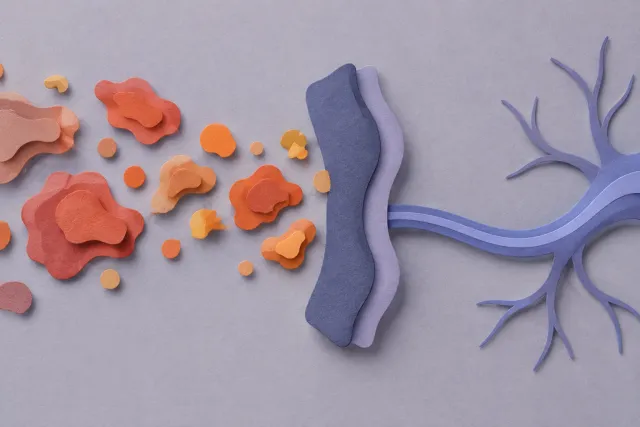
Blocking an immune pathway eased MS-like disease in mice
In donated MS brain tissue, researchers found more of a substance that drives inflammation. Blocking its production eased MS-like disease in mice, not people.
Check out the MS Buddy app
Track symptoms, monitor wellness, and stay on top of your MS care. It’s free, with no ads. Built by people living with MS.

