MS Research Roundup: February 2025
The multiple sclerosis research published in February 2025, explained in plain language. Studies are listed by how much they matter to people living with MS, most first.
The month at a glance
- 14 studies published this month.
- Newest study published February 28, 2025.
- 5 in people, 8 in the lab or in animals, 1 review of earlier research.
- Largest study: 28,145 people.
- Research from 38 institutions in 14 countries, including Seoul National University, National Institutes of Health and Imperial College London.
- Forms of MS studied: primary progressive (1), secondary progressive (1).
- Symptoms studied: vision problems (1).
Studies published in February 2025

Blood chemicals linked to MS onset and less worsening
In a study of people with and without MS, some blood chemicals were linked to higher chances of MS, while others were linked to less disability worsening.

Neck lymph nodes in MS showed more Epstein-Barr virus
In people newly diagnosed with untreated MS, researchers found more Epstein-Barr virus in neck lymph nodes and saliva, along with differences in immune cells.

New method finds shared changes in MS brain tissue
Researchers compared studies of MS brain tissue and found shared changes across them. The method points to areas for further research, not a proven treatment.

Retinal thinning linked to MS in a large eye scan study
A UK Biobank eye scan study linked MS and other health conditions to retinal thinning. Detailed measurements showed differences across parts of the retina.

People with MS in Denmark grew older from 1950 to 2023
A Danish study found that people with MS grew slightly older from 1950 to 2023. Women made up a larger share, while the rate of new diagnoses leveled off.
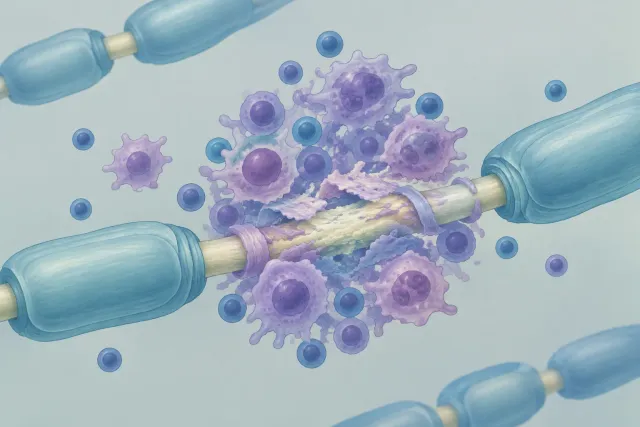
Aging cells clustered in active lesions in progressive MS
In donated tissue from people with progressive MS, aging cells were most common in active areas of myelin damage and were linked to faster disability.

Brain scans map early MS-like lesion growth in marmosets
In marmosets with an MS-like disease, brain scans and tissue tests mapped how lesions start and grow. Researchers also found a cell signal in human MS tissue.

MS lab study shows how immune cells cross blood vessels
A lab study found that the position of immune signals shaped whether certain cells stopped at blood vessel walls or crossed them. No MS treatment was tested.

Immune cell patterns linked to MS and cancer response
Researchers found an immune cell group linked to MS disease state and cancer treatment response. Mouse tests examined its role in slowing tumor growth.

In mice, an injection eased progressive MS-like disease
In mice with progressive MS-like disease, one injection of experimental particles reduced disease severity, even when given after symptoms began. No people were studied.

In mice, cell packets prevented an MS-like disease
In mice, tiny packets from immune cells prevented an MS-like disease and preserved movement control. Packets made from other cells did not protect the mice.

In MS-like mice, a gene treatment improved eyesight
An experimental gene treatment helped eye cells survive and improved vision in mice with an MS-like disease. It has not been tested in people with MS.

One gut bacterium strain worsened MS-like disease in mice
In mice with a relapsing MS-like disease, one gut bacterium strain made disease more severe. Two related strains did not, showing that strain choice mattered.
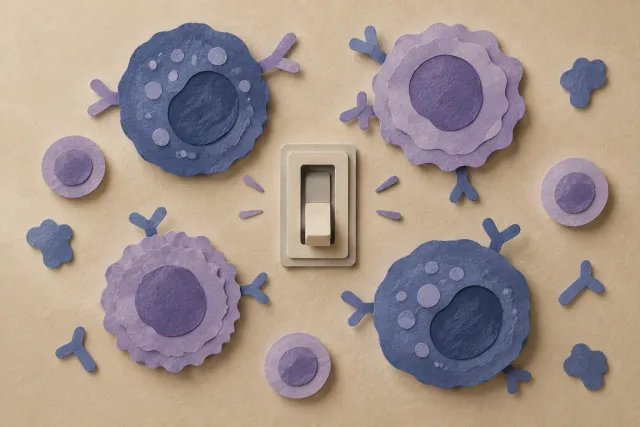
Blocking an immune cell switch eased MS-like disease in mice
In mice, blocking a cell process reduced immune cells linked to inflammation and eased MS-like disease. This study did not test a treatment in people with MS.
Check out the MS Buddy app
Track symptoms, monitor wellness, and stay on top of your MS care. It’s free, with no ads. Built by people living with MS.

