MS Research Roundup: February 2026
The multiple sclerosis research published in February 2026, explained in plain language. Studies are listed by how much they matter to people living with MS, most first.
The month at a glance
- 15 studies published this month.
- Newest study published February 27, 2026.
- 4 in people, 7 in the lab or in animals, 3 reviews of earlier research.
- Largest study: 822,438 people.
- Research from 65 institutions in 13 countries, including Stanford University, the University of California San Francisco and Boston Children's Hospital and Harvard Medical School.
- Forms of MS studied: relapsing-remitting (2), primary progressive (1), secondary progressive (1).
- Symptoms studied: vision problems (3).
- Of the 2 studies in people that tested a treatment, 1 reported a benefit and 1 had mixed results.
Studies published in February 2026

Earlier Briumvi use linked to less MS worsening at 5 years
In a five-year study of relapsing MS, adults who started Briumvi earlier had less disability worsening than those who switched to it later from Aubagio.

Stronger MS drugs did not curb relapse-free worsening
A French registry study found stronger MS treatments did not reduce worsening without relapses or scan changes, though other disability measures favored them.

Plasma exchange may improve vision after MS eye attacks
A review of 12 studies found plasma exchange may improve vision after sudden eye inflammation, including in people with MS. More rigorous trials are needed.
MS linked to genes tied to more Epstein-Barr virus
A study of two large health databases found that people with MS carried more gene patterns linked to higher Epstein-Barr virus levels in blood cells.

New brain scan tool mapped brainstem changes in MS
A new brain scan tool mapped small brainstem pathways and detected changes in people with MS. The study did not show whether the tool can guide MS care.
MS brain tissue showed distinct immune deposits near lesions
A study of tissue from people with MS and two look-alike conditions found different immune deposit patterns near damaged areas. It did not test a treatment.

Inherited gene change linked to less MS disability over time
A study of people with MS linked an inherited gene change to less disability after 20 years and fewer signs of ongoing inflammation and nerve damage in MS.

In monkeys, clemastine repaired MS-like optic nerve damage
In monkeys with MS-like optic nerve damage, clemastine helped repair nerve covering that did not heal on its own. The study did not test people with MS.

Tysabri worsened an MS look-alike condition in mice
In mice, Tysabri eased an MS-like disease but worsened a condition often mistaken for MS. Researchers traced the damage to disrupted brain support cell signals.

Blocking cell death reduced nerve cell loss in MS-like mice
In mice with an MS-like disease, blocking a step in cell death reduced nerve cell loss and disease severity. The study did not test this approach in people.

Diabetes drugs linked to lower MS risk in past studies
A review found lower MS rates among long-term users of certain diabetes drugs in past studies. Human trials in brain diseases have shown mixed results so far.

In mice, less nerve activity reduced MS-like damage
In zebrafish and mice, early swelling around nerves sometimes went away. Lower nerve activity reduced swelling; donated MS tissue also showed swelling.
In mice, removing a protein cut MS-like optic nerve damage
In mice with an MS-like disease, removing a cell protein reduced optic nerve damage and nerve cell loss. A tested compound partly reversed that protection.
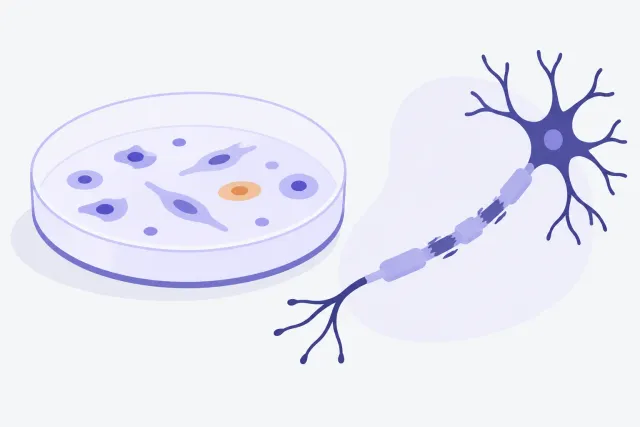
Lab-grown immune cells may help study worsening in MS
This review describes how lab-grown human brain immune cells may help researchers study worsening in MS, while noting the models' strengths and limits today.

MS drug Tecfidera slowed immune cells in lab tests
Researchers tested Tecfidera on cells from people with a virus-linked spinal cord disease, not MS. Immune cell growth and inflammatory signals fell in lab tests.
Check out the MS Buddy app
Track symptoms, monitor wellness, and stay on top of your MS care. It’s free, with no ads. Built by people living with MS.

