MS Research Roundup: October 2025
The multiple sclerosis research published in October 2025, explained in plain language. Studies are listed by how much they matter to people living with MS, most first.
The month at a glance
- 14 studies published this month.
- Newest study published October 29, 2025.
- 5 in people, 5 in the lab or in animals, 4 reviews of earlier research.
- Largest study: 9,529 people.
- Research from 44 institutions in 12 countries, including the University of Cambridge, Charité-University Medicine Berlin and China Pharmaceutical University.
- Forms of MS studied: primary progressive (2), secondary progressive (2), relapsing-remitting (1).
- Symptoms studied: difficulty walking (1), feeling tired (1), thinking problems (1).
Studies published in October 2025

Rare disease genes found in some people diagnosed with MS
A gene study found rare disease-linked changes in some people diagnosed with MS. It raises questions about diagnosis but does not confirm misdiagnosis.

Less activity linked to fatigue across illnesses, including MS
A review of wearable-device studies linked fatigue with less activity and more sitting across long-term illnesses, including MS. The links varied by illness.

Spinal fluid test distinguished MS from other conditions
In a study of 160 people, spinal fluid tests helped distinguish MS from other nerve conditions and predict later disability in people with confirmed MS.

MS in review: Mobile check-ins often worth their cost
A review included MS among six conditions studied for mobile health check-ins. Six of seven cost studies favored check-ins, but the findings were uncertain.

Blood immune cells differ in an MS look-alike disease
A study found different blood immune cell patterns in people with an MS look-alike condition than in people with MS or healthy volunteers. It also studied mice.

Myelin repair may slow with age in people with MS
A review suggests myelin repair may decline with age in people with MS, but it can occur at any age. Findings vary, and aging's exact role remains unclear.

Targeted MS immune treatments face hurdles in research
A review explains why current immune treatments may not stop MS from worsening and describes targeted approaches still being studied, along with their hurdles.

Brain scan finds hidden nerve connection loss in MS
A specialized brain scan found nerve connection loss in 31 people with MS. Affected areas were larger than MRI lesions and linked to disability and thinking.

MS lab study: Drug protected nerve cells in a dish
In a lab study linked to MS, a drug stopped immune cells from disrupting nerve cells. An immune signal was also linked to signs of nerve injury in people with MS.

In mice, drug-carrying cells slowed MS-like disease
In mice with an MS-like disease, drug-carrying immune cells slowed disease progression, improved movement, and reduced damage to nerve coverings.

Metformin eased MS-like disease in female mice only
Metformin eased an MS-like disease in female mice, but not males. Lab tests also found differences in immune cells from women and men with MS.
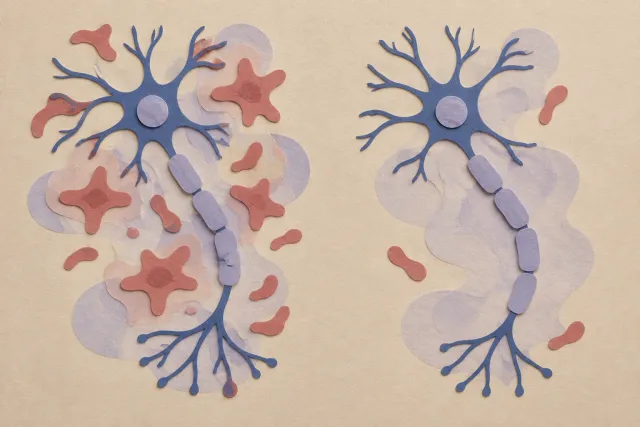
In mice, removing an immune gene eased MS-like disease
Researchers found an immune gene in samples from people with MS. Mice missing the gene had milder MS-like disease, but no treatment was tested in people.

MS risk factors shared changes in how genes are read
Studies in Australia and Sweden linked several MS risk factors to shared changes in how genes are read. The findings do not show how to prevent MS.
In mice, a brain cell protein limited MS-like inflammation
In mice with an MS-like disease, a protein in brain cells limited inflammation and signals that draw in immune cells. The study did not test a treatment.
Check out the MS Buddy app
Track symptoms, monitor wellness, and stay on top of your MS care. It’s free, with no ads. Built by people living with MS.

