Epstein-Barr virus's role in MS damage remains unclear
By MS Buddy ·
Summarized from Neurology(R) neuroimmunology & neuroinflammation, Jan 2027 · PubMed · DOI. AI-generated summary. Not medical advice.
Review · people with MS discussed in existing research
Research by Simon Thebault, Jack Antel and 3 colleagues at Wistar Institute in the United States.
Does Epstein-Barr virus drive nerve damage in MS?
Key Takeaway
A review found that Epstein-Barr virus may shape immune activity in MS, but whether it drives nerve damage remains unclear.
What They Found
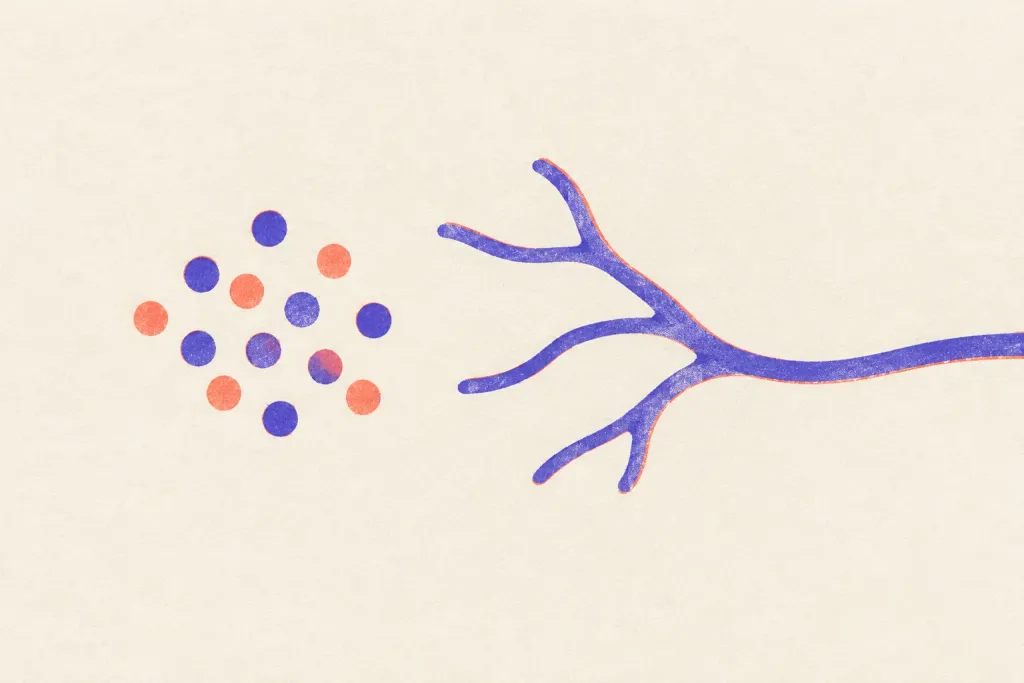
The authors reviewed evidence linking Epstein-Barr virus to MS. They said virus exposure appears to come before MS develops. They proposed that the virus may help create lasting immune activity that injures the nervous system. It remains unclear whether this immune activity starts before MS or tracks how active the disease is. Treatments aimed at the virus have not yet shown predictable benefits for people with MS.
Who Should Care and Why
This review is about MS and Epstein-Barr virus, not a new study of patients. It may interest people with MS who have heard that the virus causes the disease. The authors separate evidence of a link from proof that the virus drives damage. They also describe questions that future studies need to answer. The review does not focus on one form of MS.
Important Considerations
This was a review, so it did not report a new group of participants or test a treatment. You cannot tell from this review whether targeting the virus would help your MS. The authors say the virus's role in ongoing nerve damage remains unresolved.
AI-generated summary — for informational purposes only, not medical advice
Read the original abstract
Published in Neurology(R) neuroimmunology & neuroinflammation by et al.. Reproduced from the PubMed record.
Classical autoimmune postulates were developed for diseases driven by a dominant antigen or transferable effector mechanism. Multiple sclerosis (MS), despite compelling evidence of immune-mediated pathogenesis, has never mapped cleanly onto these classical frameworks. We propose that in complex autoimmune diseases such as MS, the proximate cause of sustained tissue injury may instead be a disease-defining immune state: a self-sustaining network of immune interactions that emerges when host susceptibility and environmental exposures converge to overcome tolerance, bridging peripheral immune dysregulation and tissue injury. The evolving Epstein-Barr virus (EBV) literature provides an informative test case for this concept. EBV exposure shows compelling epidemiologic evidence of temporality in relation to MS and may seed autoreactivity through molecular mimicry. Its lifelong persistence in antigen-experienced B cells also provides a plausible mechanism for sustaining pathogenic antigen-presentation circuits. In susceptible hosts, EBV may promote atypical antigen-presenting B-cell states, engage autoreactive and antiviral T-cell responses, and become enriched within compartmentalized CNS inflammation. Fluctuations in viral activity and antiviral immune surveillance may further modulate this state across disease stages. However, whether an EBV-conditioned immune state consistently precedes disease, quantitatively tracks disease activity, and drives tissue injury remains unresolved, and EBV-targeted interventions have not yet produced predictable clinical benefit. We therefore propose 5 postulates for causality in complex autoimmunity centered on host susceptibility, temporal precedence, establishment of a disease-defining immune state, mechanistic and anatomical linkage to tissue injury, and predictable response to intervention. Applied to EBV and MS, this framework distinguishes established evidence from remaining uncertainty, identifies the key unanswered questions, and provides a general approach for evaluating causality in complex autoimmune disease.
Categories
Check out the MS Buddy app
It’s free, with no ads. Built by people living with MS.


Related MS research
11/17/2026
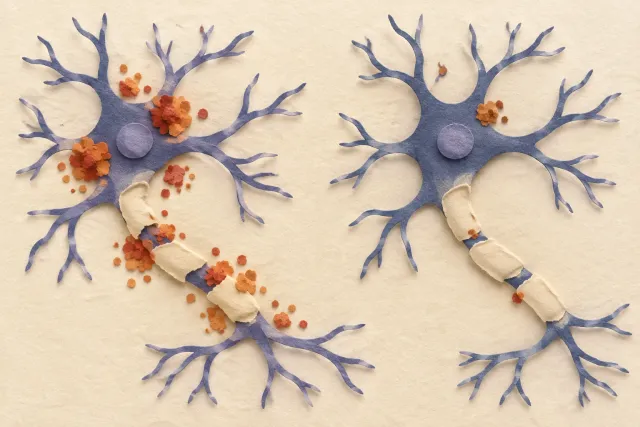
An experimental drug eased nerve-related problems and reduced inflammation in mice with an MS-like d
Read More
11/17/2026
A review explores iron-driven cell death in MS and other diseases involving immune attacks on the bo
Read More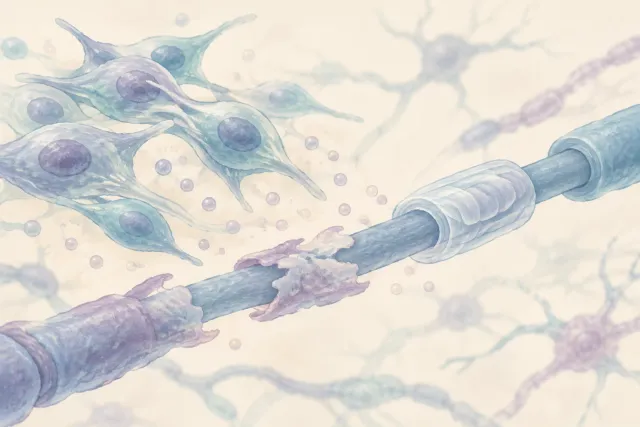
11/16/2026
In mice with damaged nerve coverings, fat-derived stem cells treated with metformin improved repair.
Read More
11/17/2026
Genetic and brain scan data linked inherited brain structure patterns to MS risk. Researchers also f
Read More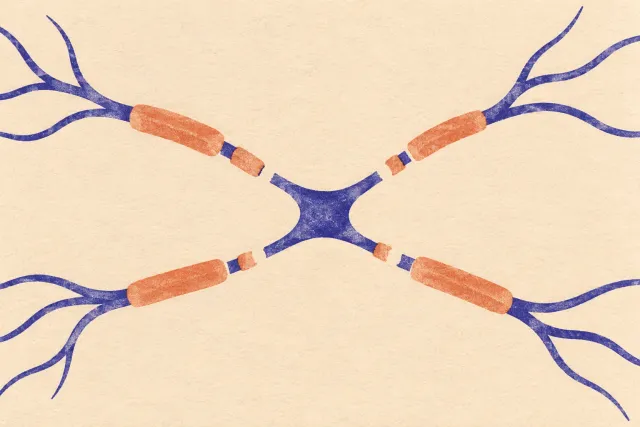
11/17/2026
Donated MS brain tissue showed damage in a vision hub. Mouse findings linked local immune cell activ
Read More
11/16/2026
A planned study will use detailed brain scans and blood tests to explore why relapsing-remitting MS
Read MoreNot all studies carry the same weight: sample size, study design and whether results were replicated all matter. The credibility score above reflects the journal, and the original paper is linked under More Details. Read how MS Buddy selects and scores research, and talk to your MS care team before acting on any study.