Voice problems were greater with more disability in MS
By MS Buddy ·
Summarized from Journal of voice : official journal of the Voice Foundation, Nov 2026 · PubMed. AI-generated summary. Not medical advice.
Observational study · 52 people with MS receiving care at a specialized center
Research by Raí Santiago, Livia Carla De Melo Rodrigues and 6 colleagues at the Federal University of Espirito Santo and São Paulo State University in Brazil.
Are voice problems linked to disability, anxiety, and depression in MS?
Key Takeaway
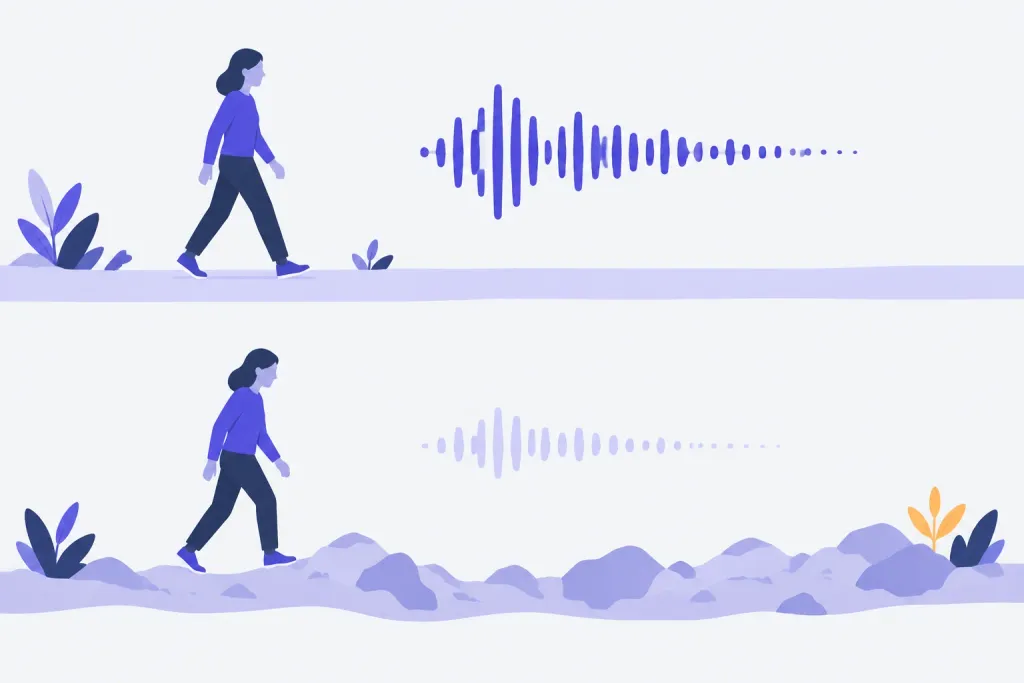
People with MS who had greater disability reported more voice problems and vocal fatigue.
What They Found
People with greater disability reported more voice problems and vocal fatigue than those with less disability. People with less disability still reported vocal fatigue. In the group with greater disability, voice problems had stronger links to anxiety and depression symptoms. People in both groups reported vocal fatigue and symptoms of anxiety and depression. Voice problems affecting daily life were more evident in the group with greater disability.
Who Should Care and Why
The study included people with MS receiving care at a specialized center. Most had relapsing-remitting MS (a form with flare-ups and periods of recovery). The researchers compared people with lower and higher levels of disability. The findings show that vocal fatigue was reported even by people with less disability. They also show that voice problems were more common among those with greater disability.
Important Considerations
The study included 52 people and measured their symptoms at one point in time. It cannot show whether increasing disability caused voice problems or whether either changed over time. Symptoms were reported by participants, so the study does not show how their voices sounded to others.
AI-generated summary — for informational purposes only, not medical advice
Read the original abstract
Published in Journal of voice : official journal of the Voice Foundation by et al.. Reproduced from the PubMed record.
To understand how voice handicap, vocal fatigue, anxiety, and depression correlate in individuals with Multiple Sclerosis (MS), based on disease progression and functional disability. This observational, cross-sectional study included 52 individuals diagnosed with MS and followed at a specialized care center. Participants were divided into two groups according to functional disability level assessed by the Expanded Disability Status Scale (EDSS): Group 1 (G1), with scores between 0 and 3, and Group 2 (G2), with scores between 3.5 and 7. Sociodemographic and clinical data were collected through a structured questionnaire. In addition, the Voice Handicap Index-10 (VHI-10), Vocal Fatigue Index (VFI), Beck Depression Inventory (BDI), and Beck Anxiety Inventory (BAI) were administered. Correlational and comparative analyses were performed with a significance level of 5% (P < 0.05). There was a predominance of female participants (n = 37; 68.8%) and relapsing-remitting disease course (n = 43; 82.7%). Participants in G1 did not exceed the VHI-10 cutoff score but presented vocal fatigue, with moderate correlations among the instruments, indicating perceived vocal effort and limitations even in cases of lower functional impairment. G2 exceeded the cutoff scores for both VHI-10 and VFI, with significantly higher scores than G1, and also demonstrated stronger correlations with anxiety and depression symptoms, suggesting that in more advanced stages of MS, vocal complaints are more consistently related to the emotional burden of the disease. Regardless of the level of functional disability, patients with MS presented self-reported vocal fatigue as well as symptoms of anxiety and depression. However, voice handicap was more evident in the group with greater disease severity.
Categories
Explore more research
Check out the MS Buddy app
It’s free, with no ads. Built by people living with MS.


Related MS research

11/17/2026
A review suggests MS fatigue may reflect extra effort to control movement and incomplete recovery af
Read More
11/16/2026
Computer studies found MS fatigue surveys can give similar group results but different individual sc
Read More
11/17/2026
A review found exercise, therapy focused on thoughts and behavior, and self-management programs show
Read More
11/17/2026
Donated MS brain tissue showed damage in a vision hub. Mouse findings linked local immune cell activ
Read More
1/1/2026
A study of 318 people with MS linked lower thinking test scores to more sexual difficulties, with th
Read More
11/1/2026
A review found nurse-led emotional support eased distress and improved coping in other long-term ill
Read MoreNot all studies carry the same weight: sample size, study design and whether results were replicated all matter. The credibility score above reflects the journal, and the original paper is linked under More Details. Read how MS Buddy selects and scores research, and talk to your MS care team before acting on any study.