In MS-like mice, treatment helped movement and thinking
By MS Buddy ·
Summarized from Brain research, Nov 2026 · PubMed. AI-generated summary. Not medical advice.
Animal study · mice with an MS-like disease
Research by Wenyi Li, Shuangxi Chen and 4 colleagues at the University of South China in China.
Did a lab-made protein improve movement and thinking in mice with an MS-like disease?
Key Takeaway
A lab-made protein improved movement and thinking in mice with an MS-like disease.

What They Found
Researchers gave mice with an MS-like disease a lab-made protein involved in nerve growth and repair. The treated mice moved their hind legs better and performed better on thinking tests. They had less damage to nerve coverings in the spinal cord and a leg nerve. More nerve cells survived in their spinal cords. The researchers also found less inflammation in parts of the spinal cord and brain.
Who Should Care and Why
This study involved mice with an MS-like disease, not people with MS. It focused on movement and thinking. Researchers measured how the mice moved their hind legs. They also tested thinking and examined nerve tissue. The findings show what happened in this mouse model, but not whether the treatment helps people.
Important Considerations
You cannot tell from this study whether the protein would improve your movement or thinking. The abstract does not say how many mice were studied. It also does not report whether the treatment caused unwanted effects.
AI-generated summary — for informational purposes only, not medical advice
Read the original abstract
Published in Brain research by et al.. Reproduced from the PubMed record.
Multiple sclerosis is an inflammatory demyelinating disorder of the central nervous system. L1 cell adhesion molecule (L1CAM) plays a critical role in neural development and injury repair. However, its influence on motor and cognitive functions in the experimental autoimmune encephalomyelitis (EAE)animal model of multiple sclerosis remains poorly understood. In this study, we utilized an EAE mouse model induced by MOG35-55 and administered recombinant L1CAM. We systematically evaluated its effects using behavioral assessments, histopathological analyses, and molecular biology. L1CAM can significantly ameliorate the demyelination in the spinal cord and sciatic nerve, increase the survival of spinal cord neurons, suppress the neuroinflammation in the lumbar spinal cord to reduce the clinical scores, and enhance hindlimb motor function. L1CAM can also suppress the neuroinflammation in the hippocampus of EAE mouse to ameliorate cognitive dysfunction. These results suggest that L1CAM may represent a promising therapeutic method for curing multiple sclerosis.
Categories
Explore more research
Check out the MS Buddy app
It’s free, with no ads. Built by people living with MS.


Related MS research
11/17/2026
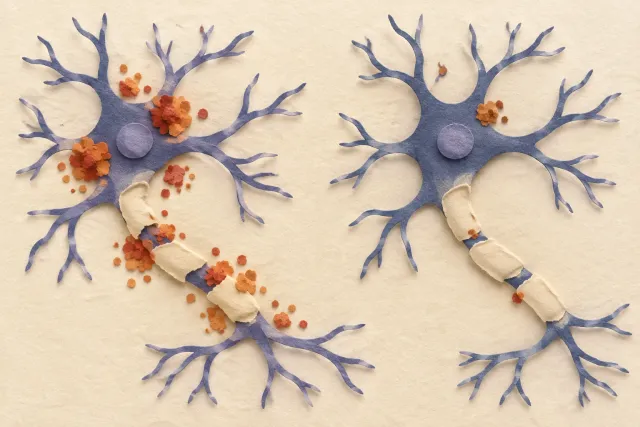
An experimental drug eased nerve-related problems and reduced inflammation in mice with an MS-like d
Read More
11/17/2026
A review explores iron-driven cell death in MS and other diseases involving immune attacks on the bo
Read More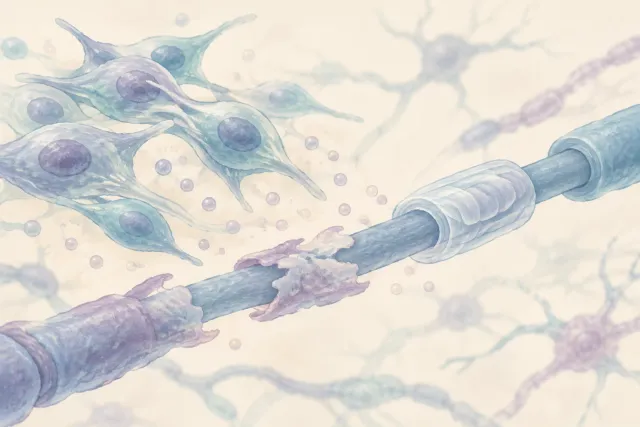
11/16/2026
In mice with damaged nerve coverings, fat-derived stem cells treated with metformin improved repair.
Read More
11/17/2026
Genetic and brain scan data linked inherited brain structure patterns to MS risk. Researchers also f
Read More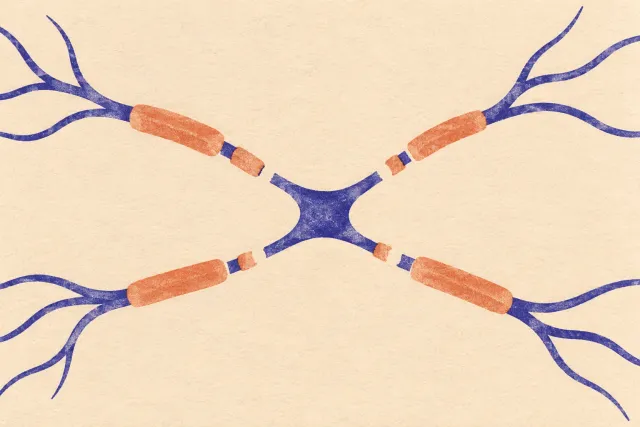
11/17/2026
Donated MS brain tissue showed damage in a vision hub. Mouse findings linked local immune cell activ
Read More
11/16/2026
A planned study will use detailed brain scans and blood tests to explore why relapsing-remitting MS
Read MoreNot all studies carry the same weight: sample size, study design and whether results were replicated all matter. The credibility score above reflects the journal, and the original paper is linked under More Details. Read how MS Buddy selects and scores research, and talk to your MS care team before acting on any study.