Some with first optic nerve inflammation later had MS
By MS Buddy ·
Summarized from Ophthalmology, Nov 2026 · PubMed. AI-generated summary. Not medical advice.
Observational study · 601 people in Japan with first-time optic nerve inflammation
Research by Sotaro Mori, Kaori Hanai and 9 colleagues at Kobe University Graduate School of Medicine, Niigata University and 9 other institutions.
How often does a first episode of optic nerve inflammation lead to an MS diagnosis?
Key Takeaway
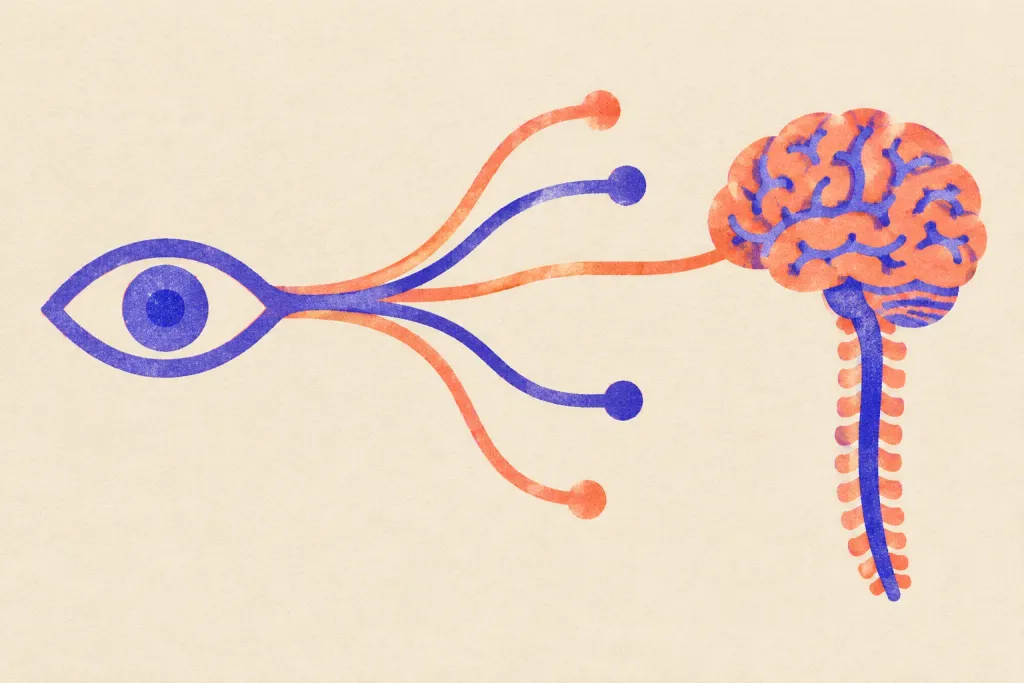
After a first episode of optic nerve inflammation, some people were later diagnosed with MS or another disease affecting the brain or spinal cord.
What They Found
Researchers followed people after their first episode of optic nerve inflammation, which can affect vision. At the first visit, 16 had an MS diagnosis; by the last follow-up, 77 did. By the last follow-up, 222 had experienced only the first episode. Another 23 had repeated episodes without a diagnosis of MS or another disease. Overall, 166 had another episode of inflammation affecting the brain, spinal cord, or optic nerve.
Who Should Care and Why
This study included people in Japan with a first episode of optic nerve inflammation. It is relevant to people whose vision problems begin with this type of inflammation. Some later received an MS diagnosis. Others received diagnoses of different diseases that can also affect the optic nerve. The findings show that the first episode did not always remain an isolated event.
Important Considerations
You should know this was a review of past medical records from 601 people at 11 specialist centers. The middle length of follow-up was 2 years, so the study does not show what happened to everyone over a longer period. You cannot tell from these results whether any treatment changed the chance of another episode.
AI-generated summary — for informational purposes only, not medical advice
Read the original abstract
Published in Ophthalmology by et al.. Reproduced from the PubMed record.
To determine the long-term diagnostic transition and temporal pattern of central nervous system (CNS) inflammatory events after a first episode of optic neuritis. Multicenter retrospective cohort study. Six hundred one consecutive patients with first-episode optic neuritis who presented to 11 tertiary referral centers in Japan between January 2016 and December 2023. Patients with MRI-confirmed first-episode optic neuritis were retrospectively enrolled. Clinical characteristics, antibody status, treatments, subsequent events, and final diagnoses were collected from longitudinal follow-up. Transition in the diagnosis of optic neuritis from the time of initial onset to the end of longitudinal follow-up. A total of 601 patients were enrolled and followed for a median of 2 years (interquartile range [IQR], 1-4.5 years). At onset, initial diagnoses were idiopathic in 295 patients (49.1%), myelin oligodendrocyte glycoprotein antibody-associated disease (MOGAD) in 134 (22.3%), neuromyelitis optica spectrum disorder (NMOSD) in 120 (20.0%), multiple sclerosis (MS) in 16 (2.7%), and other diagnoses in 36 (6.0%). At last follow-up, final diagnoses were single isolated optic neuritis in 222 patients (36.9%), recurrent isolated optic neuritis in 23 (3.8%), MOGAD in 134 (22.3%), NMOSD in 125 (20.8%), MS in 77 (12.8%), and other diagnoses in 20 (3.3%). Overall, 166 of 601 patients (27.6%) experienced at least one CNS inflammatory event other than the initial optic neuritis. Recurrent optic neuritis was the most frequent event (58.8%), followed by encephalitis (22.9%) and myelitis (18.3%). Among patients with post-onset events, 64 (48.9%) developed an event within 1 year and 97 (74.0%) within 2 years after the initial episode of optic neuritis. Among the 131 patients with post-onset events, more than half (77 patients, 58.8%) developed outside maintenance therapy, including 68 after treatment discontinuation and 9 without maintenance therapy. More than one-quarter of patients with first-episode optic neuritis experienced CNS inflammatory events other than the initial optic neuritis, and only approximately one-third ultimately remained classified as having single isolated optic neuritis. These findings demonstrate that first-episode optic neuritis frequently represents the onset of an underlying CNS inflammatory disease, underscoring the importance of long-term neurological surveillance following the initial episode.
Categories
Explore more research
Check out the MS Buddy app
It’s free, with no ads. Built by people living with MS.


Related MS research
11/18/2026
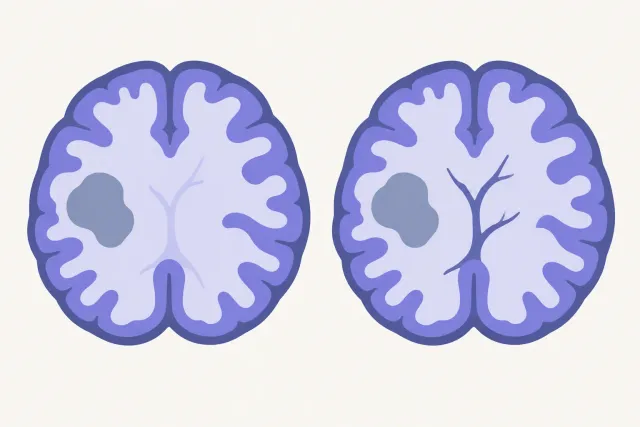
An adjusted MRI scan found more veins within MS brain lesions in 17 people with MS. It improved scan
Read More
11/16/2026
A planned study will use detailed brain scans and blood tests to explore why relapsing-remitting MS
Read More
1/1/2026
After a car crash, brain and spine scans revealed signs of MS in an 18-year-old male. Further tests
Read More
11/14/2026
An opinion paper explains why MS brain scans can show tissue loss without proving nerve signal failu
Read More
11/15/2026
In 70 people with MS in Brazil, blood tests often showed signs of past viral exposure. Results did n
Read More
11/12/2026
In 82 older adults with MS, more lesions on the brain's outer layer weakened links between resting b
Read MoreNot all studies carry the same weight: sample size, study design and whether results were replicated all matter. The credibility score above reflects the journal, and the original paper is linked under More Details. Read how MS Buddy selects and scores research, and talk to your MS care team before acting on any study.