MS Research News (page 5)
New MS studies, summarized simply by AI. Not medical advice, and not reviewed by a clinician — just a plain-language look at what’s being published.
- 535 studies
- From PubMed
- Plain language
The latest studies

Not MS: Immune cells may help fight a brain disease
In a brain disease studied outside MS, researchers found signs that certain immune cells enter the brain and may help defend it.

Blocking an immune signal eased MS-like disease in mice
Blocking an immune signal reduced the severity of an MS-like disease in mice with immune cells that target myelin.
Most MS digital health studies did not test ease of use
Only a minority of studies on digital health tools for MS checked how easy those tools were to use.

In MS-like mice, removing a gene reduced nerve cell loss
Removing a gene from nerve cells reduced nerve cell loss in mice with an MS-like disease.
Reactivated immune cells sped up MS-like disease in animals
Reactivated immune memory cells sped up the start of an MS-like disease in animals.
Blocking a virus lowered immune activity in MS cells
Immune cells from people with active MS showed more Epstein-Barr virus activity, and blocking the virus reduced immune activity in the lab.

Lab-treated immune cells eased MS-like disease in mice
Immune cells treated with particles from amniotic fluid stem cells reduced immune attacks and illness in mice with an MS-like disease.

New brain cell map tracks MS-like myelin loss in mice
A new map of mouse brain cells showed how the cells changed during loss and repair of the nerve covering.

MS is more common farther from the equator: a review
This review describes why MS is more common farther from the equator, but it does not establish the cause.

Review explores gut fiber byproducts in MS and immunity
This review describes how substances made when gut microbes break down fiber may affect immune responses in MS and other autoimmune diseases.
Early blood test linked to later MS disability worsening
Higher levels of a blood marker after a first MS-like attack were linked to greater disability worsening years later.

Brain damage tied to thinking differs by sex in MS
Men and women with MS had similar rates of thinking problems, but brain damage linked to test scores differed by sex.
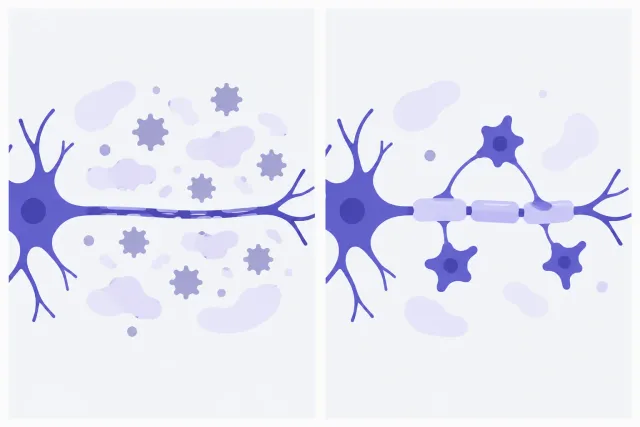
B-cell removal made MS-like disease worse in mice
Removing B cells worsened MS-like disease in mice, while giving back certain B cells reversed the worsening.

MS drugs that calm immune cells show early trial benefits
A review found encouraging early trial results for MS drugs that reduce immune cell activity, but their long-term effects remain unknown.
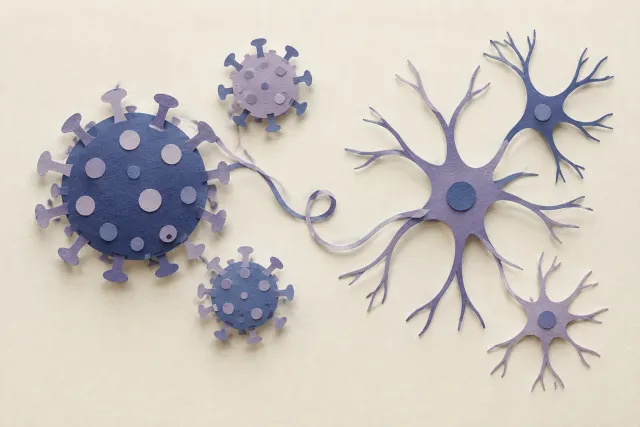
Review finds a widespread virus tied to MS development
Evidence from several fields links Epstein-Barr virus (a widespread virus) to the development of MS.
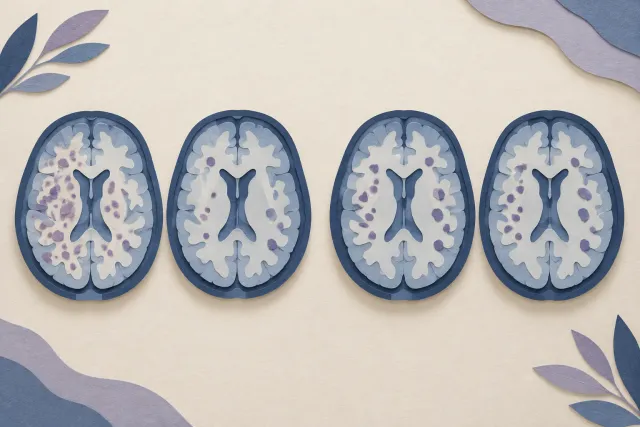
Computer-made MRI scans found more MS lesions in one test
One type of computer-made brain scan showed more MS lesions than its usual version; another type showed about the same number.

Stopping some MS drugs in pregnancy may raise relapse risk
Stopping some MS treatments during pregnancy can raise the risk of relapse and disability.

Brain changes in post-COVID fatigue overlap with MS
People with lasting fatigue after COVID-19 had brain changes that overlapped with changes seen in people with MS.

MS worsening without relapses may start early in disease
This review says MS can worsen without relapses, even early in the disease.

MS hospital stays varied by season in a national study
Hospital stays for MS varied by season in a US study, but the abstract does not say which months had more stays.

MS optic nerves showed changes in normal-looking tissue
In donated tissue from people with MS, normal-looking areas of the optic nerve had changes to nerve coverings linked to more immune cells.

Brain scan method may tell MS from an MS look-alike
A brain scan method found a pattern in MS lesions that was much less common in an MS look-alike condition.

Brain tissue loss tracks thinking and disability in MS
In MS, patterns of brain tissue loss were linked to disability and thinking problems.

MS blood cells showed weaker signals that calm immunity
Blood cells from people with MS showed weaker activity linked to calming immune responses.

In mice, two pathways damaged myelin in an MS look-alike
In mice, two immune pathways caused nerve-covering damage linked to a condition that can look like MS.
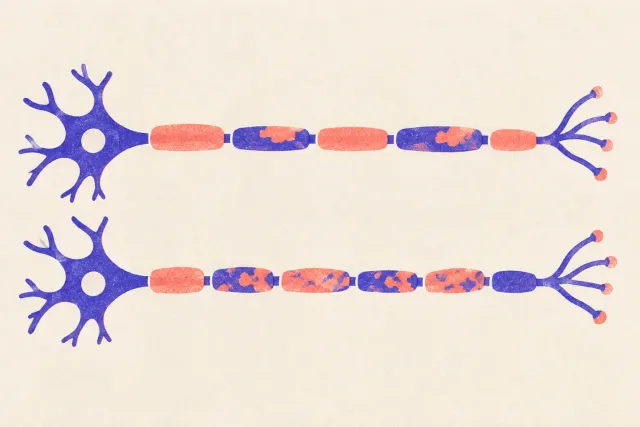
Male hormones aided MS-like myelin repair in female mice
Male sex hormones helped female mice repair damaged nerve covering, while tissue from women and men with MS showed different responses.

Stem cells linked to less brain loss in progressive MS
An early stem cell transplant trial in MS reported less loss of gray matter, a type of brain tissue.
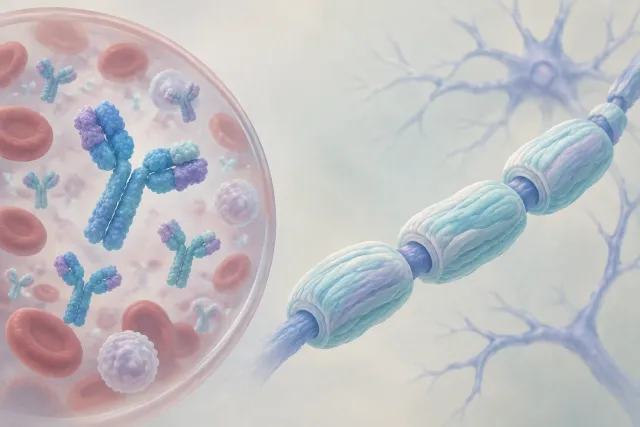
MS and a Common Virus: What New Blood Tests Reveal
In a Korean study, people with MS had higher levels of one marker of past Epstein-Barr virus infection than the comparison groups, but the finding does not change MS care today.

MS Research: What Spinal Fluid Immune Cells May Reveal
A gene change was linked to the number of certain immune cells in spinal fluid, but the finding does not yet change MS care.

Weaker MRI spots nerve damage in mice in an MS study
A lower-strength MRI detected loss of the protective covering around nerve fibers in a mouse study related to MS.

Shape tasks were harder for people with two forms of MS
People with relapsing-remitting MS struggled more as a shape task got harder, while those with secondary progressive MS struggled at every level tested.
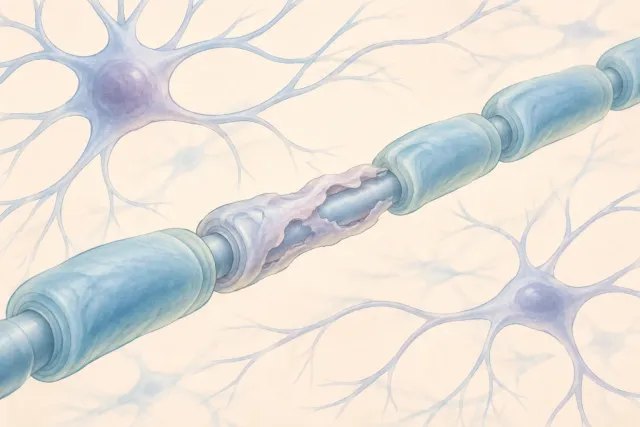
When moms had MS, their daughters felt different too
Girls and young women whose mothers had MS described keeping familiar routines while missing time together and feeling different from their peers.

Lining up MS brain scans gave stronger scan readings
In people with MS, brain scan readings were stronger when the images lined up with the scanner’s magnetic field.

Spinal fluid test flagged MS cases another test missed
A spinal fluid test that measures signs of immune activity was better than the standard test at telling MS apart from other conditions.

AI scan tool improved MS checks and saved reading time
A computer tool helped doctors spot new or growing MS lesions (areas of damage) on brain scans more accurately and quickly.

Adding talk therapy to Pilates improved walking in MS
Adding talk therapy to supervised Pilates improved balance and walking more than supervised Pilates alone in adults with MS.

MS side effect posts showed two communication styles
Online discussions of MS medication side effects showed two main styles: sharing personal experiences and speaking from a position of knowledge.

MS linked to about 9% of eye nerve inflammation in Japan
MS accounted for about 9% of first episodes of eye nerve inflammation among patients studied at one Japanese hospital.

Gene differences linked to MS risk and worse disease
Differences in two genes were linked to higher MS risk, while a difference in another gene was linked to worse disease.

Memory-related brain area smaller in childhood-onset MS
People with childhood-onset MS had a smaller memory-related brain region, and smaller size was linked to more brain damage.
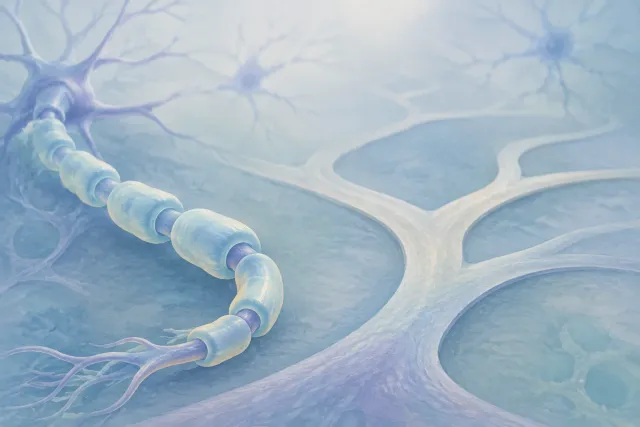
Choosing a first MS treatment brought fear and doubt
Choosing a first MS treatment involved fear, doubt, and uncertainty about both future disability and whether treatment would work.

MS rates varied widely across North and South America
MS was more common in some parts of the Americas than others, and the share of people living with MS rose over time.
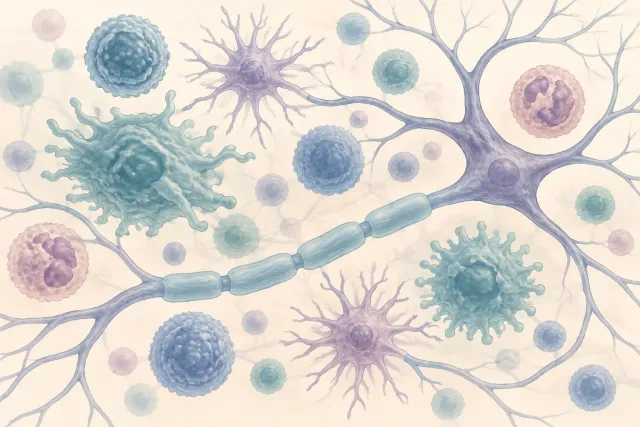
Pregnancy may affect MS and other diseases differently
Pregnancy changes the body's defenses in ways that may affect MS and other diseases differently.

Exercise and coping programs helped fatigue in MS review
Exercise, therapy focused on thoughts and behavior, and self-management programs showed the most consistent benefits for MS fatigue in this review.

Review explores cell death in MS and other diseases
Iron-driven cell death may contribute to MS and other diseases where the immune system attacks the body, but human evidence remains limited.

Planned MS study will test scans to track worsening
This planned study will test whether scans of nerve covering can help explain MS worsening without flare-ups or new areas of damage.

MS study: Metformin-treated cells aided repair in mice
Stem cells from fat tissue helped repair damaged nerve coverings in mice more effectively when treated with metformin before transplantation.

Voice problems were greater with more disability in MS
People with MS who had greater disability reported more voice problems and vocal fatigue.
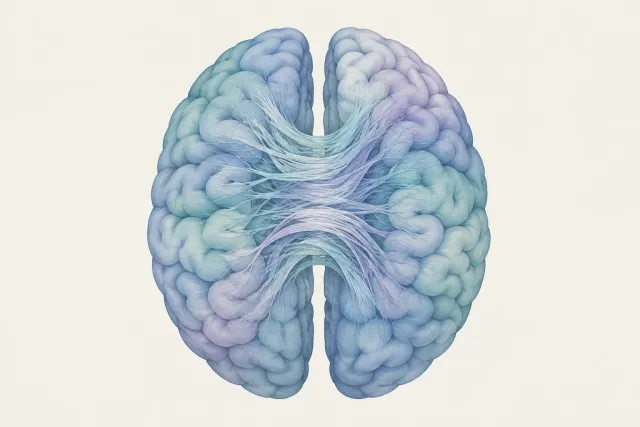
MS brain scans cannot confirm nerve signal failure
In MS, a brain scan can show changes in the tissue connecting the brain’s halves, but it cannot confirm that nerve signals have failed.

In relapsing MS, Mavenclad users' thinking scores rose
Among people with relapsing MS taking Mavenclad, thinking test scores improved, while a timed walking test took longer.

Review links vitamin D and vitamin A immune signals to MS
A review links vitamin D and vitamin A signals to immune activity in MS and other inflammatory diseases.
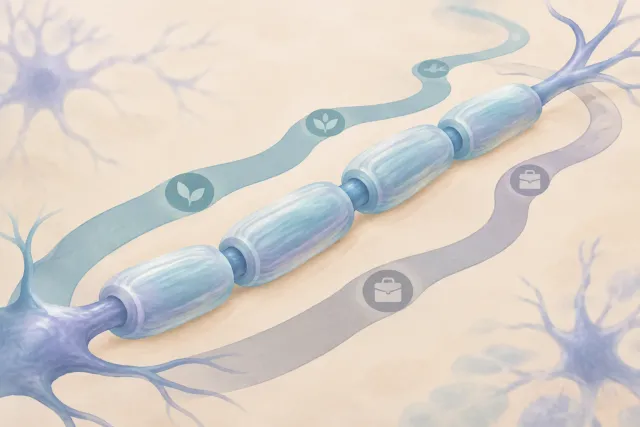
People with MS described hidden work to stay employed
People with MS in France described hidden work involved in managing medical care and staying in professional life.
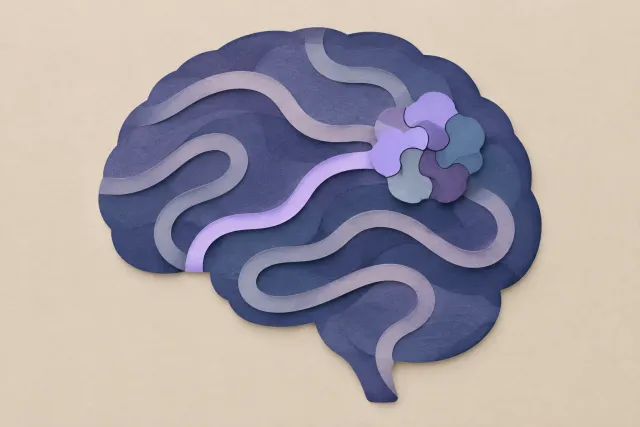
New brain scan method better predicted thinking in MS
A new method for reading brain scans generally predicted thinking test scores in people with MS better than similar methods.

In older MS, more lesions weaken brain-thinking links
In older adults with MS, having more lesions on the brain's outer layer weakened links between brain activity and thinking speed.

In MS-like mice, treatment helped movement and thinking
A lab-made protein improved movement and thinking in mice with an MS-like disease.

MS brain scans found changes that failed a stricter test
Brain scans showed subtle differences in people with MS and low disability, but those findings did not hold up under a stricter analysis.

In mice, treated B cells eased MS-like disease signs
In mice with an MS-like disease, B cells carrying specially made particles reduced disease signs.

MS Hospital Stays: Why Mental Health Checks Matter
People hospitalized with MS had more anxiety, depression, and long-lasting pain than other hospital patients, making it important to ask about these concerns during care.

MS and Anxiety: A Better Way to Spot Worry About the Future
A short survey may help care teams understand how worry about an uncertain future relates to anxiety in people with MS.

MS and Suicide Risk: What to Share With Your Care Team
In a study of people with MS, past suicide attempts were more common among those with depression, a history of smoking, or difficult childhood experiences.

Could MS Brain Scans Help Predict Future Thinking Changes?
In this study, the condition of the nerve-protecting coating in MS brain lesions was linked to thinking speed and visual memory four years later.

Could Voice Checks Help Track MS Changes From Home?
Voice recordings may one day help spot and track MS-related changes, but these tools are not ready for routine care.

MS Changes Without Relapses: What to Watch For in Care
MS can gradually affect daily life even without relapses, so regular check-ins should look beyond walking.

MS and Sexual Health: What Women Can Ask Their Care Team
Sexual health concerns are common for women with MS, and talking about them with your care team can help you find support that fits your needs.

MS Study Finds Fewer Alzheimer’s Diagnoses With One Drug
In a large study of medical records, older people with MS who had received natalizumab had fewer recorded Alzheimer’s diagnoses, but the study cannot show that the drug prevented Alzheimer’s.

Can MRI Scans Help Tell a True MS Relapse From a Flare?
In two MS treatment trials, counting only relapses with new changes on an MRI scan made the difference between the medicines look much larger, but symptoms still matter even when a scan shows no new change.

MS Infusion Timing: Why Longer Gaps May Need a Check
In one person with MS, changing natalizumab infusions from every four weeks to every six weeks was followed by low drug levels and antibodies that may make the treatment less effective.

Childhood MS blood patterns linked to Epstein-Barr virus
People with childhood-onset MS had blood DNA patterns linked to immune activity and the Epstein-Barr virus.

Stem Cell Treatment May Calm MS Brain Inflammation
In 24 people with severe MS, a stem cell transplant was followed by years of lower signs of inflammation and nerve damage.

New Brain Scans May Reveal Hidden Inflammation in MS
A review of 49 studies found that a special brain scan can detect signs of inflammation in MS, but differences in how scans are done limit its use in routine care.

MS and Pregnancy: What to Know About Pausing Treatment
In this study, MS flare-ups were uncommon during pregnancy and the first year after birth among women who had stopped ocrelizumab or rituximab before pregnancy.
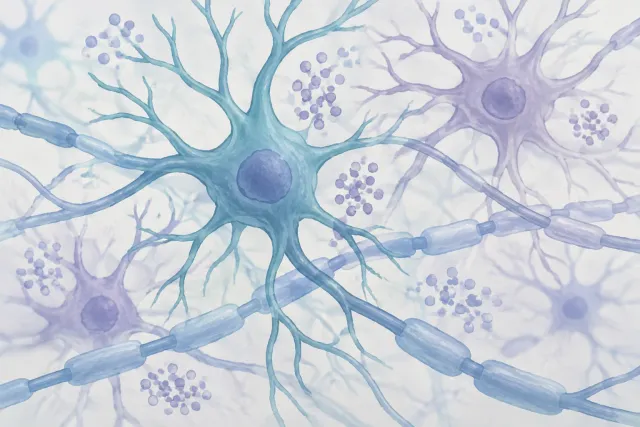
How Brain Support Cells May Affect Inflammation in MS
Brain support cells may help drive inflammation in MS, but treatments aimed at these cells are still being studied.

Could a Blood Test Help Track MS Symptoms and Changes?
Certain chemicals in the blood were linked to how MS affects daily abilities, but a blood test based on them is not ready for use in care.

Positive MOG Test? Why Your MS Diagnosis May Need Review
A positive MOG antibody test does not rule out MS, so people with signs of both conditions may need follow-up to get the right diagnosis and care.

After MS Treatment: How Long Can Disease Stay Quiet?
Many people with relapsing MS stayed stable for years after finishing a two-year course of cladribine, but regular checkups remained important because disease activity returned for some.

A Closer MRI Look May Help Clarify Your MS Diagnosis
A special type of MRI may help doctors tell whether spots in the brain are linked to MS, but the images need careful review.

MS Medicine May Help Protect Blood Vessels in Diabetes
In diabetic mice, a medicine used to treat MS helped blood vessels relax, but the study did not test whether it protects blood vessels in people with MS.
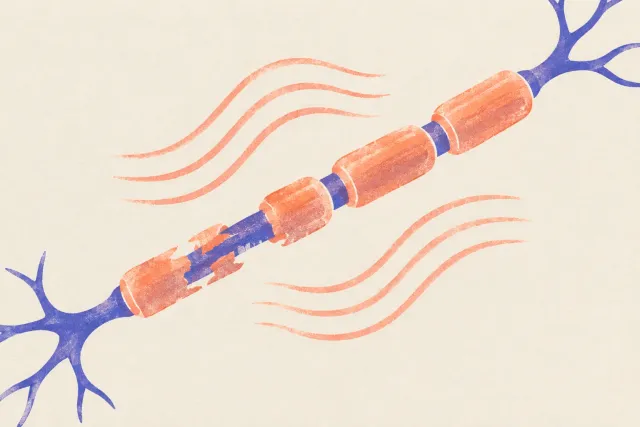
Can Electrical Stimulation Help Repair Nerves in MS?
In six animal studies, electrical stimulation showed signs of helping repair the protective coating around nerves, but researchers do not yet know whether it helps people with MS.

New MS Diagnosis Rules May Help Spot Early Disease Signs
The 2024 MS diagnosis rules identified some people who did not meet the older rules but already had blood and brain scan signs of MS-like damage.

MS Treatment May Slow Disability Across Diverse Groups
In these MS trials, ocrelizumab was linked to less disability worsening across the groups studied, though the result was less certain for Black participants because that group was small.

MS Rehab: Ways to Manage Symptoms and Stay Active Longer
Starting MS rehabilitation early and tailoring it to your daily challenges may help you stay active and manage symptoms alongside your medical treatment.

Could Blocking an Immune Signal Help Control MS Activity?
Blocking a message that helps switch on immune cells may be a promising way to treat MS, but more research is needed to show how well it works.

Could an MS Walking Drug Help Vision After Eye Attacks?
In a study of a condition different from MS, people who added fampridine to treatment for a severe eye attack had better vision recovery than those who did not.

MS Care Lessons: Treating More Than Today's Symptoms
This review uses MS care as an example of why treatment should aim to prevent lasting harm, not only ease symptoms today.

MS Myelin Repair: What New Research Means for Your Care
A review of myelin repair research explains why fixing damaged nerve coating in MS is difficult and why researchers are studying ways to help it regrow.

Could Calming an Immune Alarm Lead to Better MS Care?
A research review suggests that calming an overactive immune alarm called AIM2 might someday help treat MS, but no benefit for patients has been proven.
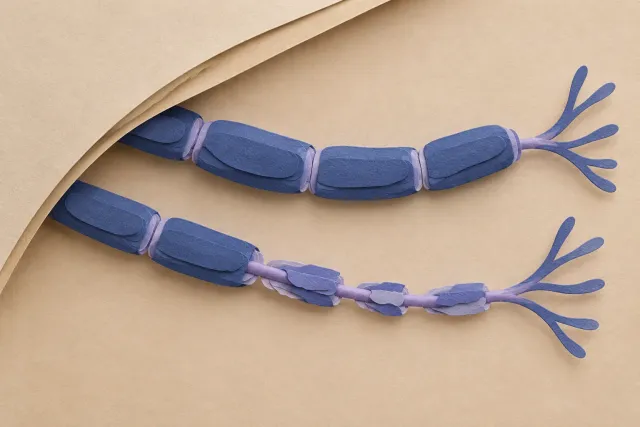
Early Treatment May Better Protect Nerve Coverings in MS
In mice with an MS-like illness, starting an experimental treatment early protected nerve coverings and reduced symptoms more than starting it later.

Could Aging Brain Cells Shape Future MS Treatments?
A review suggests that worn-out cells may play a role in MS, but researchers do not yet know whether targeting them can help patients.

MS Treatment: What Predicts Fewer Relapses Over Time?
In a Danish study, people with relapsing MS had fewer attacks during the first three years of cladribine treatment, but later disease activity was hard to predict.
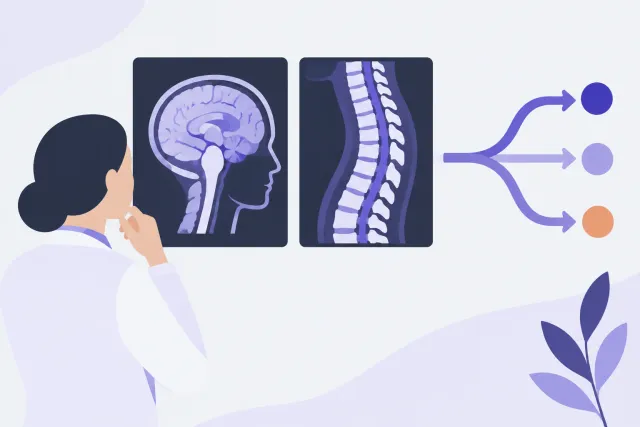
MS Treatment: What Brain and Spine Scans Can Reveal
In a survey of French MS specialists, certain brain and spine scan findings strongly influenced whether they recommended starting a powerful MS treatment right away.

MS and Diabetes: Why Blood Sugar Checks May Matter
In a large English study, people with MS developed diabetes more often than people without MS, and those who developed diabetes had more hospital stays and a higher risk of death.

Endometriosis and MS: What the Link Means for You Today
A review found that endometriosis and MS occur together more often than expected, but it does not show that either condition causes the other.

MS and Thinking Changes: Why Regular Checkups Matter
In people with MS, greater physical disability often goes along with more trouble thinking, so regular care should check both.
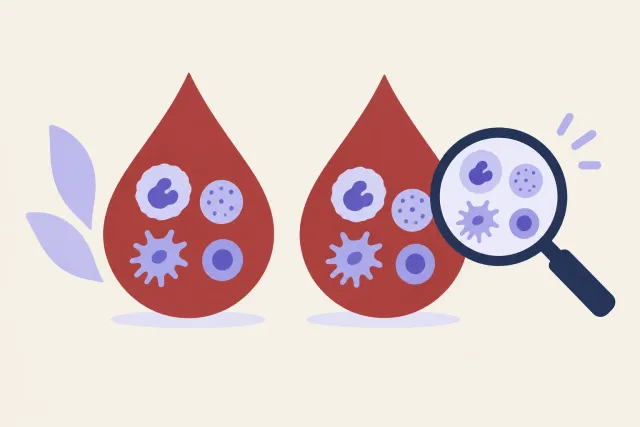
MS Blood Tests May Flag When Treatment Stops Working
If certain immune cells do not rise in a routine blood test after starting natalizumab, it may be a sign that the MS treatment needs a closer check.

Other Immune Conditions May Appear Before MS Diagnosis
People later diagnosed with MS were more likely to have another condition in which the immune system attacks the body, especially in the two years before their MS diagnosis.

MS Thinking Tests: Why Some People Say No to Testing
In a study of 334 people with MS, those with progressive MS, anxiety-related disorders, or no concerns about their thinking were more likely to decline a thinking test.

MS Look-Alikes: Which Treatments May Help Prevent Attacks
In a large Italian study of two conditions that can look like MS, certain treatments were linked to a longer time without attacks for people with AQP4-positive NMOSD, but not for those with MOGAD.

What MS Research Says About Drugs That Calm Inflammation
Drugs used for diabetes and weight loss reduced inflammation in lab studies that included MS models, but there is no evidence yet that they help people with MS.

Could an Extra Treatment Help Keep MS Quiet After Transplant?
Researchers suggest that adding a drug after a stem cell transplant might help keep MS from returning, but this idea has not yet been proven.

MS in Nordic Countries: What Rising Numbers Mean for You
MS is becoming more common in Nordic countries, making long-term care planning increasingly important for patients and caregivers.

Check out the MS Buddy app
It’s free, with no ads. Built by people living with MS.


More on MS Buddy
 MS clinical trialsTrials recruiting now, by state, phase or treatment.
 Browse MS centers by stateThe full directory, with a page for each state and city.
 MS terms explainedThe words you hear at appointments, in plain language.
 Questions for your doctorMore than 200, grouped by what is going on with you.